
March 2026

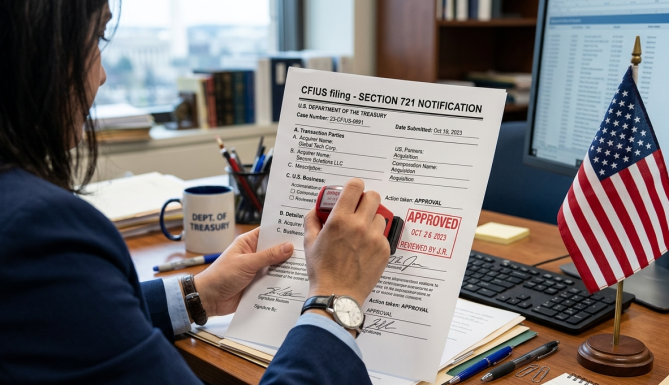
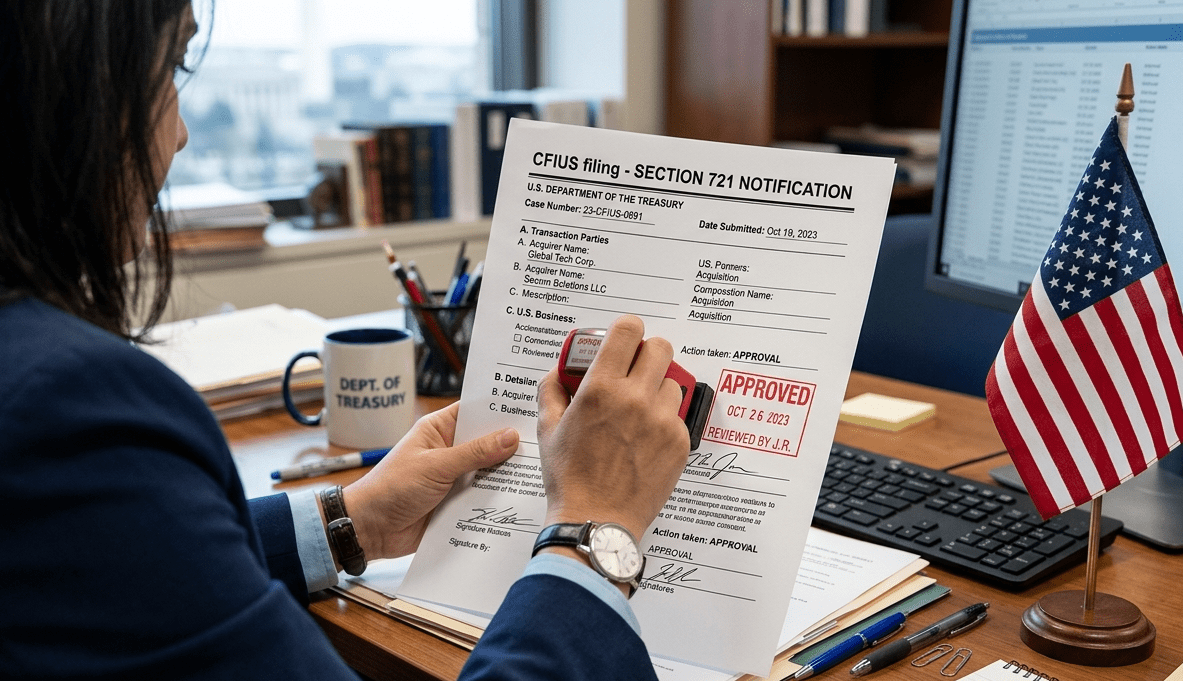
CFIUS is Looking to Fast Track Some Transactions… Could this Program Benefit You? 

Authors:
Jennifer Diaz, President, Diaz Trade Law
Amber Pirson, Attorney, Diaz Trade Law

On February 6, 2026, the U.S. Department of the Treasury formally issued a Request for Information (RFI) that outlines how a “Known Investor Program” could streamline aspects of CFIUS review for trusted, lower‑risk repeat investors while maintaining rigorous national‑security analysis. The RFI was published in the Federal Register on February 9, 2026, and opened for public comment through March 18, 2026. This RFI follows Treasury’s May 8, 2025 announcement of a fast‑track pilot and “Known Investor” portal under CFIUS to collect investor information in advance of a filing—the core mechanism Treasury says will drive efficiency gains. In parallel, Treasury’s CFIUS overview reiterates the standard timelines, underscoring that any new efficiency program must still fit within the existing statutory framework. 

What is the Fast Track program?  

According to Treasury’s RFI, the KIP is a process by which CFIUS would pre‑collect a standardized set of information from eligible foreign investors (via a questionnaire and certification) before any specific transaction filing, with the goal of more efficient subsequent reviews. Importantly, Treasury stresses that participation does not guarantee a particular outcome and does not alter CFIUS jurisdiction or statutory procedures. 

Who is eligible to participate?  

Treasury’s RFI proposes objective eligibility criteria. Highlights include: 

  • Repeat‑filer threshold: The foreign investor (inclusive of subsidiaries) must have filed ≥3 covered transactions or covered real‑estate transactions with CFIUS in the […]

By |2026-03-30T20:08:22-04:00March 29, 2026|CFIUS, U.S. Department of Treasury|0 Comments

Non-notified Transactions Raising Red Flags for CFIUS 

Authors:
Jennifer Diaz, President, Diaz Trade Law
Amber Pirson, Attorney, Diaz Trade Law

Even when a transaction does not trigger a mandatory filing, Committee on Foreign Investment in the United States (CFIUS) risk does not disappear. While the regime remains technically “voluntary” in many cases, Treasury’s increasingly active non-notified program means that deals can still be reviewed, and potentially unwound, long after closing. As a result, parties must weigh the benefits of filing against the risk of future scrutiny, particularly in sensitive sectors or with higher-risk investors.  

What counts as “voluntary”  

Given the breadth of CFIUS’ jurisdiction to review transactions between US and non-US entities where the latter’s investment implicates U.S. national security, if a deal is not a “covered transaction” (no foreign‑government substantial interest in a TID U.S. business; no critical technology), the filing decision is voluntary, but not risk‑free. CFIUS runs a vigorous non‑notified program that screens thousands of transactions annually and can request (or require) a filing post‑closing. 

Why file voluntarily anyway?

A voluntary filing can deliver “safe harbor” (limiting CFIUS’ ability to initiate a review of the transaction in the future), reduce the risk of a disruptive post‑closing inquiry, and preserve options if a customer or government counterparties expect CFIUS clearance in sensitive sectors (e.g., defense supply chain, advanced computing and AI, biosecurity, or large‑scale personal‑data platforms). 

A practical playbook to reduce CFIUS risk and avoid being flagged 

1) Review the risks of your investor profile and structure. 

Confirm “excepted investor/state” […]

By |2026-03-30T20:08:05-04:00March 29, 2026|CFIUS, U.S. Department of Treasury|0 Comments

Mandatory vs. Voluntary CFIUS Filings: Triggers, Timing, and How to Report a Mandatory Transaction 

Authors:
Jennifer Diaz, President, Diaz Trade Law
Amber Pirson, Attorney, Diaz Trade Law

The Foreign Investment Risk Review Modernization Act (FIRRMA) created limited mandatory filing requirements—departing from the Committee on Foreign Investment in the United States (CFIUS)’s historically voluntary regime—and Treasury has continued to sharpen enforcement tools and penalties. Understanding when a filing is compulsory (and how to do it) reduces execution risk and avoids costly post‑closing surprises.  

When a CFIUS filing is mandatory 

Two categories trigger a mandatory submission (via declaration, with the option to file a full notice instead): 

  • Foreign government “substantial interest” in a TID U.S. business. If (i) a foreign government holds a 49%+ voting interest in the foreign acquirer, and (ii) that acquirer obtains a 25%+ voting interest (“substantial interest”) in a TID U.S. business (one involving critical technology, critical infrastructure, or sensitive personal data), a filing is mandatory. 
  • Critical technology + export authorization nexus. A filing is mandatory if the U.S. target produces, designs, tests, manufactures, fabricates, or develops a critical technology and a U.S. regulatory authorization (e.g., export license) would be required to transfer that technology to any relevant party to the transaction (including certain upstream owners).  

Timing rule. For a mandatory filing, the parties must submit at least 30 days before closing. The date of closing or “completion date” is the earliest date upon which the foreign person acquired any […]

By |2026-03-30T20:08:41-04:00March 29, 2026|CFIUS, U.S. Department of Treasury|0 Comments

Even AI Needs a License – Know When Automation Unlawfully Crosses Into “Customs Business” 

Authors:
Jennifer Diaz, President, Diaz Trade Law
Amber Pirson, Attorney, Diaz Trade Law

In January of this year, CBP quietly released a ruling (January 16, 2026/CEE.HQ H350722) that demarcates clear boundaries of where AI is permitted to facilitate Customs filings and where such artificial tools cross the “human-brokers-only” line.  

Case Background 

A foreign “Unlicensed Company” was operating an online platform and marketing to importers without seeking approval or a license from CBP. This platform offered four key services: 1) connecting importers to brokers, 2) utilizing an optical character recognition (OCR) tool to cull entry data from shipping documents, 3) generating HTSUS subheading suggestions for specific articles, and 4) submitting CBP Form 5106 on behalf of new importers. The question before CBP was whether the company was conducting customs business without a license. 

CBP Ruling 

In its ruling, CBP stated that the definition of “customs business” is quite broad. To that end, developers could accidentally create agentic parameters that trespass the bounds of what it means to engage in “customs business.” Here are some key takeaways from the ruling: 

  1. “CBP cautioned that an unlicensed entity may not serve as an intermediary between a broker and importer if the unlicensed entity is actively participating ‘in decisions and activities relating to the preparation or filing of Customs documents for imported merchandise, or relating to any other action amounting to customs business.’” However, since the “Unlicensed […]

What Happened This Month in International Trade (March 2026)

Another busy month in customs & international trade news: 

Court of International Trade (CIT) 

  • On March 4, 2026, Judge Eaton issued a strong and detailed order requiring the refunds of IEEPA Tariffs. We expect the government to appeal this order. Judge Eaton issued subsequent orders: (i) suspending the previous order to allow CBP time to implement their refund process; (ii) amending the previous order to include Brazil and India IEEPA tariffs.  
  • New York Attorney General Letitia James and prosecutors from 23 other states filed a lawsuit in the CIT to block President Trump’s global tariff regime under Section 122 and order refunds to states.  

Administration   

  • President Trump issued a 60-day waiver to the Jones Act, temporarily allowing foreign-flagged ships carrying oil and gas to travel between US ports. 

Customs and Border Protection (CBP)    

  • CBP ruled that the submission of a CBP Form 5106 on an importer’s behalf constitutes “customs business” and requires a broker license.  
  • CBP’s Trade and Cargo Security Summit has been rescheduled to Sept. 8-10, from its original dates in April. CBP said this is due to the DHS lapse in appropriations. 

Congress   

By |2026-03-27T12:35:21-04:00March 27, 2026|news, Snapshot|0 Comments
Go to Top