U.S. Customs and Border Protection (CBP)

U.S. Department of Labor Introduces New Tools to Support Supply Chain Integrity and Address Unfair Foreign Labor Practices

On April 8, 2026, the U.S. Department of Labor (DOL) announced the launch of several tools to empower U.S. companies to strengthen their supply chains and defend against unfair competition stemming from overseas labor abuses.

Self-Assessment Tools

DOL launched four voluntary self-assessment tools that provide practical, user-friendly guidance to help companies map supply-chain risks and evaluate labor practices. The tools can also guide companies in taking steps to ensure alignment with U.S. forced labor laws and strengthen supply chains that support American workers and American industry.

The new tools are: 

  • LaborShield: A mobile app that features information on egregious labor violations in over 145 countries (formerly the Sweat and Toil app).
  • ImportWatch: A resource that brings together the department’s labor abuse research with U.S. import data from the U.S. Census Bureau to produce a red-flag list of all high-risk goods for U.S. importers.
  • SourcingStrong: A tool to help U.S. businesses build strong labor due diligence systems to identify and manage risk in their supply chains.
  • Supply Chain Traceability Portal: The portal provides visibility across supply chains and beyond the first tier to expose where exploitative labor hides.

Announcement Insights 

Diaz Trade Law was in attendance at the launch event in Washington, D.C. – hosted by the DOL and […]
FinCEN Issues NPRM to Fully Implement Whistleblower Program

Authors:

Jennifer Diaz, President, Diaz Trade Law

Amber Pirson, Attorney, Diaz Trade Law


FinCEN’s March 30, 2026, Notice of Proposed Rulemaking (NPRM) marks a major step toward fully operationalizing the agency’s whistleblower program, designed to incentivize reporting of Bank Secrecy Act (BSA), sanctions, IEEPA, and other illicit finance violations. The proposal outlines how whistleblowers can securely submit information, how awards will be determined, and what protections will be available.  

This development reflects the Treasury Department’s broader strategy to strengthen financial system integrity and encourage actionable tips that support enforcement efforts. For financial institutions, compliance professionals, and potential whistleblowers, the NPRM provides long‑awaited clarity on program structure and expectations. 

Overview of the Proposed Rule 

FinCEN’s NPRM proposes a comprehensive framework for administering whistleblower submissions and awards. Key elements include: 

  • Secure submission procedures for individuals reporting suspected violations of the BSA, OFAC sanctions, and related laws. 
  • Eligibility criteria for whistleblower awards, including documentation requirements and timelines. 
  • Award ranges of 10–30% of monetary penalties collected when a whistleblower’s information leads to a successful enforcement action. 
  • Robust protections for individuals who provide information, including confidentiality and anti‑retaliation safeguards. 

These provisions aim to encourage early, detailed reporting while ensuring whistleblowers are shielded from adverse consequences. 

Why FinCEN Is Prioritizing Whistleblower Incentives 

The NPRM aligns with Treasury’s broader […]

New Executive Order Adjusting Imports of Aluminum, Steel, and Copper into the United States

Authors:

Jennifer Diaz, President, Diaz Trade Law
Amber Pirson, Attorney, Diaz Trade Law

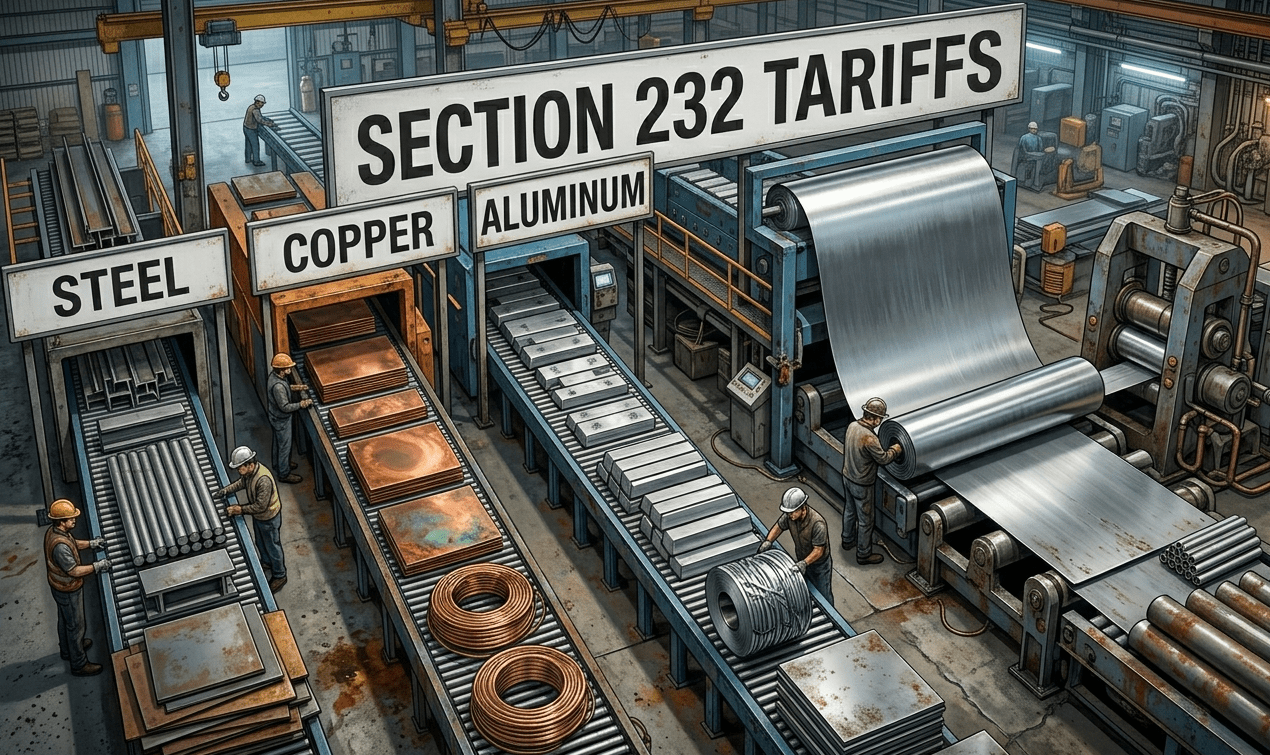
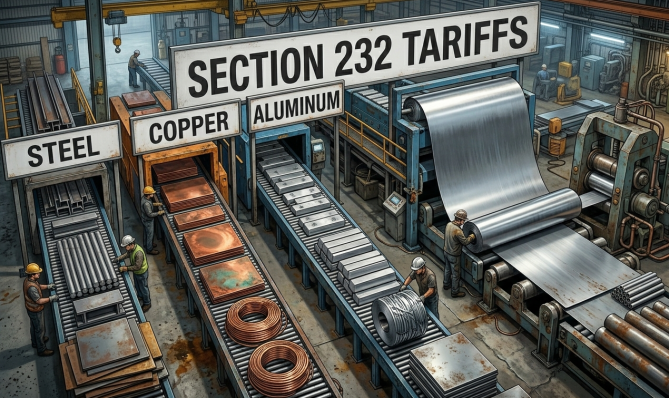
On April 2, 2026, the President issued a proclamation strengthening Section 232 actions to adjust imports of aluminum, steel, and copper, continuing to cite national security concerns and the need to reinforce domestic metals industries. 

Key elements include: a tiered tariff structure and some products exempt from Sec. 232 tariffs, effective at 12:01 am on April 6, 2026; and manufacturing drawback claims.  

Generally, tariffs will be assessed to the full value of imported products, “regardless of their metal content,” with reduced rates for certain products from the United Kingdom (UK) and the same 200% ad valorem duty for subject metal articles from Russia. 

  • Aluminum and steel articles, most copper articles, and certain derivative articles of aluminum and steel…  
    • 50%, unless either the 25% or 10% rates listed below can apply. 
      • 25% for UK products, the aluminum content of which is composed entirely of aluminum that was smelted or most recently cast in the UK, or the steel content of which is composed entirely of steel that was melted and poured in the UK. 
      • 10% for derivative articles, steel or copper content, when the metal content was smelted and cast in the U.S. 
  • For certain copper and […]

Even AI Needs a License – Know When Automation Unlawfully Crosses Into “Customs Business” 

Authors:
Jennifer Diaz, President, Diaz Trade Law
Amber Pirson, Attorney, Diaz Trade Law

In January of this year, CBP quietly released a ruling (January 16, 2026/CEE.HQ H350722) that demarcates clear boundaries of where AI is permitted to facilitate Customs filings and where such artificial tools cross the “human-brokers-only” line.  

Case Background 

A foreign “Unlicensed Company” was operating an online platform and marketing to importers without seeking approval or a license from CBP. This platform offered four key services: 1) connecting importers to brokers, 2) utilizing an optical character recognition (OCR) tool to cull entry data from shipping documents, 3) generating HTSUS subheading suggestions for specific articles, and 4) submitting CBP Form 5106 on behalf of new importers. The question before CBP was whether the company was conducting customs business without a license. 

CBP Ruling 

In its ruling, CBP stated that the definition of “customs business” is quite broad. To that end, developers could accidentally create agentic parameters that trespass the bounds of what it means to engage in “customs business.” Here are some key takeaways from the ruling: 

  1. “CBP cautioned that an unlicensed entity may not serve as an intermediary between a broker and importer if the unlicensed entity is actively participating ‘in decisions and activities relating to the preparation or filing of Customs documents for imported merchandise, or relating to any other action amounting to customs business.’” However, since the “Unlicensed […]

Avoid Penalties, Build Confidence: Importers Thrive in CBP’s Recordkeeping Compliance Program

Authors: 
Jennifer Diaz, President, Diaz Trade Law
Amber Pirson, Attorney, Diaz Trade Law

What Is the Recordkeeping Compliance Program?

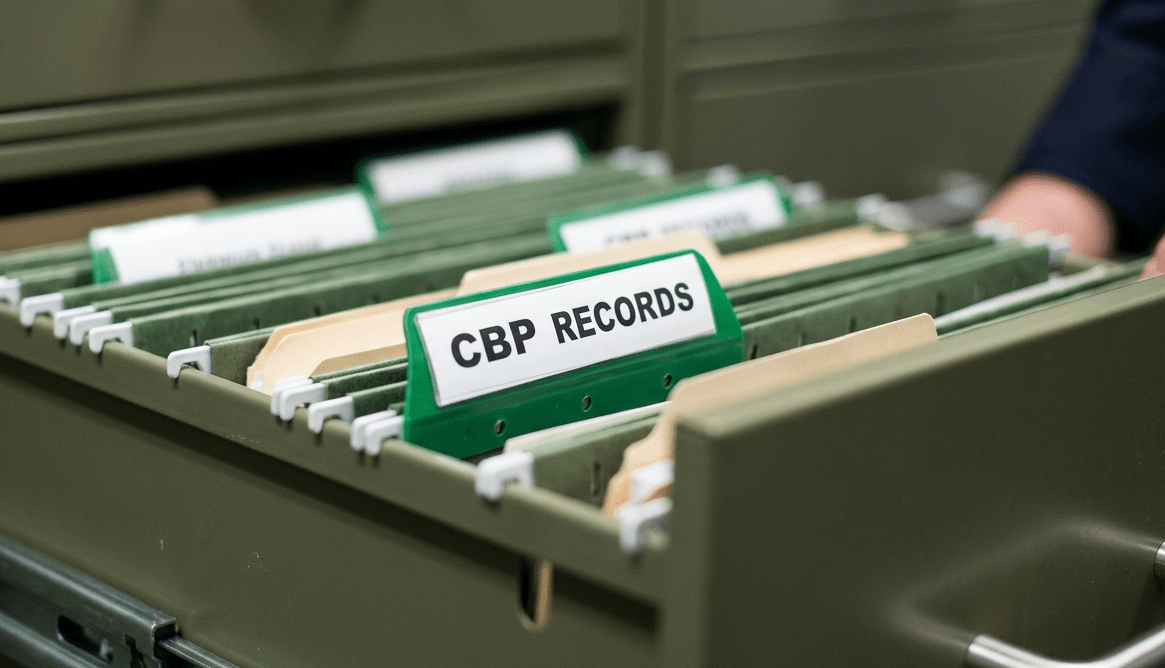
U.S. Customs and Border Protection (CBP) requires importers to maintain and produce specific records related to their entries. Under 19 C.F.R. § 163.12, CBP offers a Recordkeeping Compliance Program—a voluntary and free certification program designed to help importers strengthen their internal controls, improve record management, and demonstrate a proactive commitment to compliance. 

At its core, the program allows importers to work collaboratively with CBP to ensure they understand their obligations under the Customs Modernization Act (Mod Act) and are equipped to meet them. Certification signals that an importer has established reliable procedures for maintaining, retrieving, and producing required entry records. 

What Are the Benefits of the Program?

Participating in the Recordkeeping Compliance Program offers several meaningful advantages:  

  • Reduced Exposure to Penalties 

Certified importers may receive mitigation benefits if they inadvertently fail to produce certain records. CBP recognizes that certified companies have invested in compliance infrastructure and may treat isolated lapses more leniently. 

  • Stronger Relationship With CBP 

Certification demonstrates good faith and transparency. Importers who demonstrate that they take compliance seriously often experience smoother interactions with CBP, including during audits, inquiries, and enforcement actions. 

  • Improved Internal Controls 

The certification process requires importers to evaluate and […]

Go to Top