Export

New OFAC Advisory: Signs of Sham Transactions and Sanctions Evasion

On March 31, 2026, the U.S. Department of the Treasury’s Office of Foreign Assets Control (OFAC) released an important advisory addressing the growing use of sham transactions to evade U.S. sanctions. The guidance highlights how sanctioned individuals and entities often attempt to disguise their continuing interest in property through opaque legal structures, proxies, and other intermediaries. OFAC’s message is clear: transactions that merely appear to transfer ownership but do not genuinely extinguish a blocked person’s interest remain prohibited. 

What OFAC Defines as a “Sham Transaction” 

Sham transactions occur when blocked persons “give up their property on paper only,” while continuing to benefit from or control the asset. These arrangements often involve: 

  • Proxies, straw owners, or front companies acting on behalf of sanctioned individuals. 
  • Opaque legal structures, including multi‑layered LLCs, partnerships, or trusts. 
  • Transfers to family members or close associates who may serve as facilitators. 
  • Commercially unreasonable transfers, such as those lacking adequate consideration. 
  • Continued use or control of the asset by the blocked person after the purported transfer. 

Pro Tip: Look beyond legal formalities and identify the economic realities of the transaction. 

Red Flags Identified by OFAC 

The advisory outlines several indicators that a transaction may be a sham designed to evade sanctions. These include: 
FinCEN Issues NPRM to Fully Implement Whistleblower Program

Authors:

Jennifer Diaz, President, Diaz Trade Law

Amber Pirson, Attorney, Diaz Trade Law


FinCEN’s March 30, 2026, Notice of Proposed Rulemaking (NPRM) marks a major step toward fully operationalizing the agency’s whistleblower program, designed to incentivize reporting of Bank Secrecy Act (BSA), sanctions, IEEPA, and other illicit finance violations. The proposal outlines how whistleblowers can securely submit information, how awards will be determined, and what protections will be available.  

This development reflects the Treasury Department’s broader strategy to strengthen financial system integrity and encourage actionable tips that support enforcement efforts. For financial institutions, compliance professionals, and potential whistleblowers, the NPRM provides long‑awaited clarity on program structure and expectations. 

Overview of the Proposed Rule 

FinCEN’s NPRM proposes a comprehensive framework for administering whistleblower submissions and awards. Key elements include: 

  • Secure submission procedures for individuals reporting suspected violations of the BSA, OFAC sanctions, and related laws. 
  • Eligibility criteria for whistleblower awards, including documentation requirements and timelines. 
  • Award ranges of 10–30% of monetary penalties collected when a whistleblower’s information leads to a successful enforcement action. 
  • Robust protections for individuals who provide information, including confidentiality and anti‑retaliation safeguards. 

These provisions aim to encourage early, detailed reporting while ensuring whistleblowers are shielded from adverse consequences. 

Why FinCEN Is Prioritizing Whistleblower Incentives 

The NPRM aligns with Treasury’s broader […]

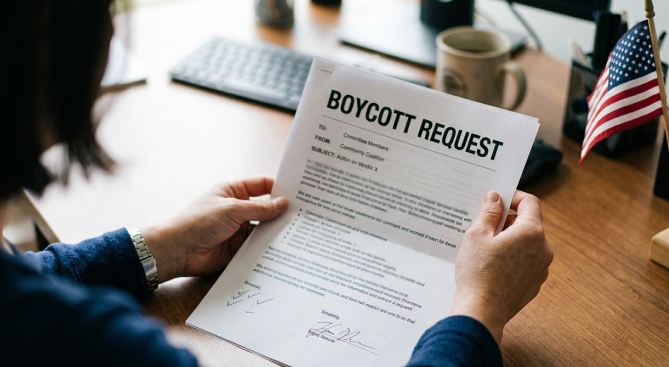
You’ve Been Asked to Boycott – What to Know Before You Self‑Disclose

Companies engaged in international trade occasionally encounter requests that raise red flags under the U.S. anti‑boycott regulations. Whether the request appears in a tender document, a purchase order, a letter of credit, oral agreement, verbal request to furnish particular information, or a casual email, the moment you spot boycott‑related language, and become aware that your organization has complied with the request, the clock starts ticking to self-disclose to the Office of Antiboycott Compliance (OAC)

2025 and Beyond: BIS Updates Boycott Requester List

On April 3, 2025, the U.S. Department of Commerce’s Bureau of Industry and Security (BIS) published an updated list of foreign companies that have made boycott-related requests, including requests to comply with the Arab League boycott of Israel. In addition to removing 18 entities who have certified that they have ceased making such prohibited requests, BIS added 30 parties to its list (outlined below). Majority of the newly listed entities are domiciled in Malaysia, which aligns with the country’s foreign policy position that it refuses diplomatic and economic relations with Israel. While companies generally want to comply with the laws of every jurisdiction in which they operate, it is important to understand the risks of non-compliance with OAC rules.  

As recommended by BIS, U.S. companies are encouraged to diligently review transaction documents from all sources, especially those involving these listed parties, to identify possible boycott-related language and to determine whether their recipients have a reporting requirement to BIS.   

If you are unsure whether the language of your contracts must be reported to the OAC or concerned about doing business in jurisdictions where listed entities have been identified, contact Diaz Trade Law today at info@diaztradelaw.com or 305-456-3830.  

Want more information on OAC compliance? Read more here. 

ICYMI: Tri-Seal Advisory: Sanctions and Export Controls Relief for Syria

On November 7, 2025, the Office of Foreign Assets Control (OFAC), alongside the U.S. Department of State and the U.S. Department of Commerce, issued a Tri-Seal Advisory: Sanctions and Export Controls Relief for Syria

The Advisory follows President Trump’s Executive Order on June 30, 2025, formally removing U.S. sanctions on Syria and directing agencies to take additional measures to encourage U.S. private sector and foreign partner reengagement in Syria.

New Opportunities & Remaining Restrictions

The Advisory outlines what business with Syria is now permissible as well as what restrictions remain.

Permissible Business:

  • The United States no longer imposes comprehensive sanctions on Syria. 
  • The Caesar Act is suspended, except for sanctionable transactions with Russia and Iran.
  • The transfer of most basic civilian use U.S.-origin goods, as well as software and technology, to or within Syria is permitted without a license. 

Remaining Restrictions:

  • Sanctions remain on “the worst of the worst:” Bashar al-Assad and his associates, human rights abusers, drug traffickers, and other destabilizing regional actors.
  • The U.S. Government continues to review Syria’s State Sponsor of Terrorism (SST) designation. 
  • Most Commerce Control List items going to Syria still require a U.S. export license.

What Exporters Should Do

The removal of Syria sanctions and the easing of […]

Go to Top