Countries

New AD/CVD Case Filed Against Silicon Photovoltaic Cells from India, Indonesia, and Laos

A new antidumping and countervailing duty action has been filed against Silicon Photovoltaic Cells, whether or not assembled into modules, imported from the Republic of India, the Republic of Indonesia, and the Lao People’s Democratic Republic. The allegation is that imports from India, Indonesia, and Laos are unfairly subsidized and being dumped.  

Full list of exporters here. 

Full list of importers here 

Background on AD/CVD Investigations 

Antidumping duty (“AD”) and countervailing duty (“CVD”) investigations are brought jointly by the U.S. International Trade Commission (“USITC”) and the U.S. Department of Commerce (“Commerce”). AD investigations are triggered when a domestic industry alleges that it has been injured by competing imports of particular goods from specific countries being sold at less than a fair value. Meanwhile, CVD investigations are triggered when a domestic industry alleges that it has been injured by competing imports that are being unfairly subsidized by their governments. The domestic industry initiating the investigation is known as the petitioner while the foreign industry participating in the investigation is known as the respondent. 

Scope of the Investigation 

The merchandise covered by these investigations is crystalline silicon photovoltaic cells, modules, laminates, panels, and building integrated materials.  

The products subject to the investigations are currently classified in the Harmonized Tariff Schedule of the United States (HTSUS) under subheadings 8501.61.0000, 8507.20.80, 8541.42.0010, and 8541.43.0010. Full scope here.
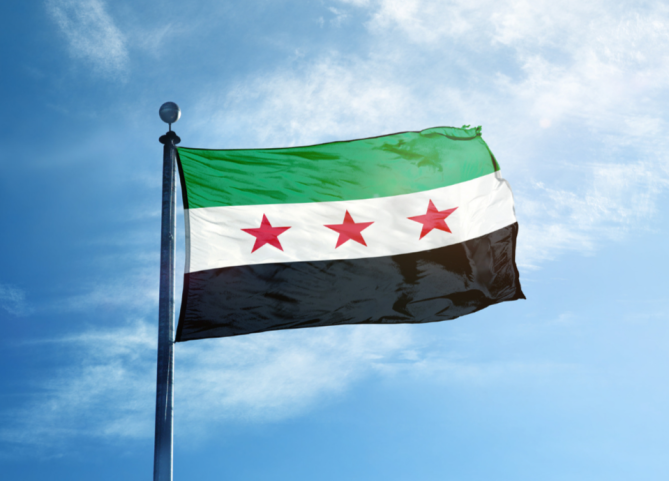
ICYMI: President Trump Lifts Syria Sanctions

On June 30, 2025, President Trump issued an Executive Order formally terminating the Syria sanctions program, which had been in place for two decades.  

The Executive Order (effective July 1, 2025) revoked the following six prior executive orders dating back to 2004:

  • Executive Order 13338 of May 11, 2004 (Blocking Property of Certain Persons and Prohibiting the Export of Certain Goods to Syria),
  • Executive Order 13399 of April 25, 2006 (Blocking Property of Additional Persons in Connection With the National Emergency With Respect to Syria)
  • Executive Order 13460 of February 13, 2008 (Blocking Property of Additional Persons in Connection With the National Emergency With Respect to Syria)
  • Executive Order 13572 of April 29, 2011 (Blocking Property of Certain Persons with Respect to Human Rights Abuses in Syria)
  • Executive Order 13573 of May 18, 2011 (Blocking Property of Senior Officials of the Government of Syria)
  • Executive Order 13582 of August 17, 2011 (Blocking Property of the Government of Syria and Prohibiting Certain Transactions with Respect to Syria).

The revocation of Executive Order 13338 ended the national emergency that underpinned the subsequent executive orders.

The Executive Order also waived certain sanctions imposed by the Syria Accountability Act and the Chemical and Biological Weapons Control and Warfare Elimination Act.

On […]

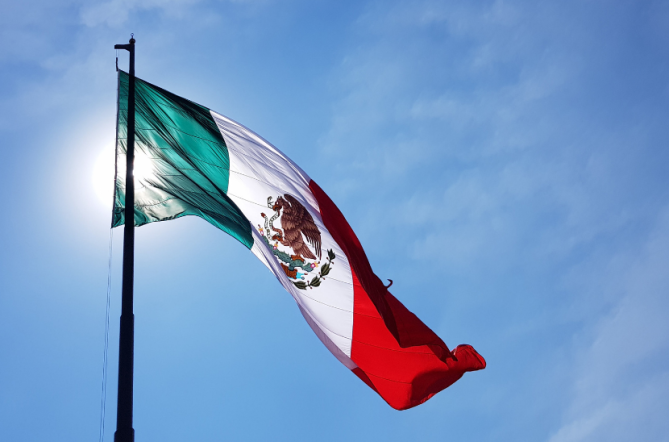
Breaking the Chains: Forced Labor in Mexico’s Supply Chains

Forced labor is a severe violation of human rights and a persistent global issue affecting millions of individuals. According to the ILO, 27.6 million men, women, and children are in forced labor globally.[1] Over $236 billion USD is generated in illegal profits using forced labor every year.[2]

Both Mexico and the United States have robust legal frameworks to eradicate the use of forced labor and have made great strides in detection and enforcement. However, the secretive nature of the forced labor industry, changing bad actor tactics, and the intensive resourcing required presents challenges to both countries.

Forced Labor in Mexico

While Mexico has made great strides in identifying and preventing forced labor, it is still a problem that impacts hundreds of thousands of citizens. Certain risk factors[3] may make certain individuals more vulnerable to forced labor than others, including:

  • Poverty
  • Unstable immigration status
  • Language barriers
  • Lack of social support systems
  • Physical or developmental disabilities

An estimated 850,000 people are still living in modern slavery today in Mexico.[4] The Department of Labor has identified a list of goods it has reason to believe are produced using child labor and forced labor in Mexico including[5]:

  • Beans
  • Cattle
  • Chile peppers
  • Coffee
  • Cucumbers
  • Eggplants
  • Garments
  • Leather goods/accessories
  • Melons
  • Onions
  • Poppies
  • Pornography
  • Sugarcane
  • Tobacco
  • Tomatoes

Investigations have also uncovered severe forms of child labor including using children in the production and trafficking of drugs and in dangerous agricultural work.[6]

Mexico Efforts to Eliminate Forced Labor in Mexico

Over the […]

By |2025-06-25T16:24:22-04:00June 25, 2025|Countries, Forced Labor, Mexico|0 Comments

New AD/CVD Case Filed Against L-lysine from the People’s Republic of China

A new antidumping and countervailing duty action has been filed against “L-lysine” imported from China. The L-lysine covered by this petition is animal feed grade L-lysine. The allegation is that imports from China are both unfairly subsidized and are being dumped (sold below cost).   

Full list of exporters here. 

Full list of importers here 

Background on AD/CVD Investigations 

Antidumping duty (“AD”) and countervailing duty (“CVD”) investigations are brought jointly by the U.S. International Trade Commission (“USITC”) and the U.S. Department of Commerce (“Commerce”). AD investigations are triggered when a domestic industry alleges that it has been injured by competing imports of particular goods from specific countries being sold at less than a fair value. Meanwhile, CVD investigations are triggered when a domestic industry alleges that it has been injured by competing imports that are being unfairly subsidized by their governments. The domestic industry initiating the investigation is known as the petitioner while the foreign industry participating in the investigation is known as the respondent. 

Scope of the Investigation 

The merchandise covered by these investigations is animal feed grade L-lysine. Lysine is an essential amino acid added to animal feed that is used in biosynthesis of proteins. 

The products subject to the investigations are currently classified in the Harmonized Tariff Schedule of the United States (HTSUS) under statistical reporting number 2922.41.0090. 

Full scope here. 

U.S. Imports of Subject […]

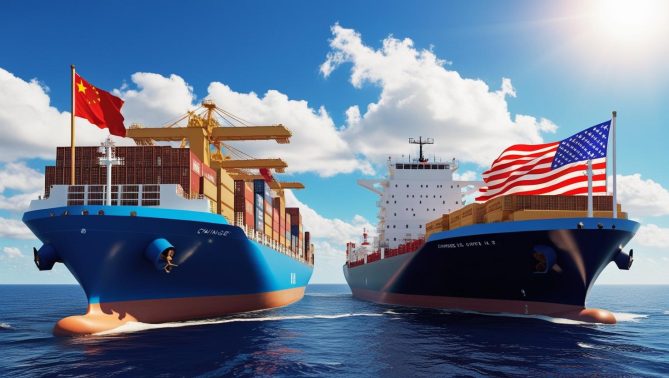
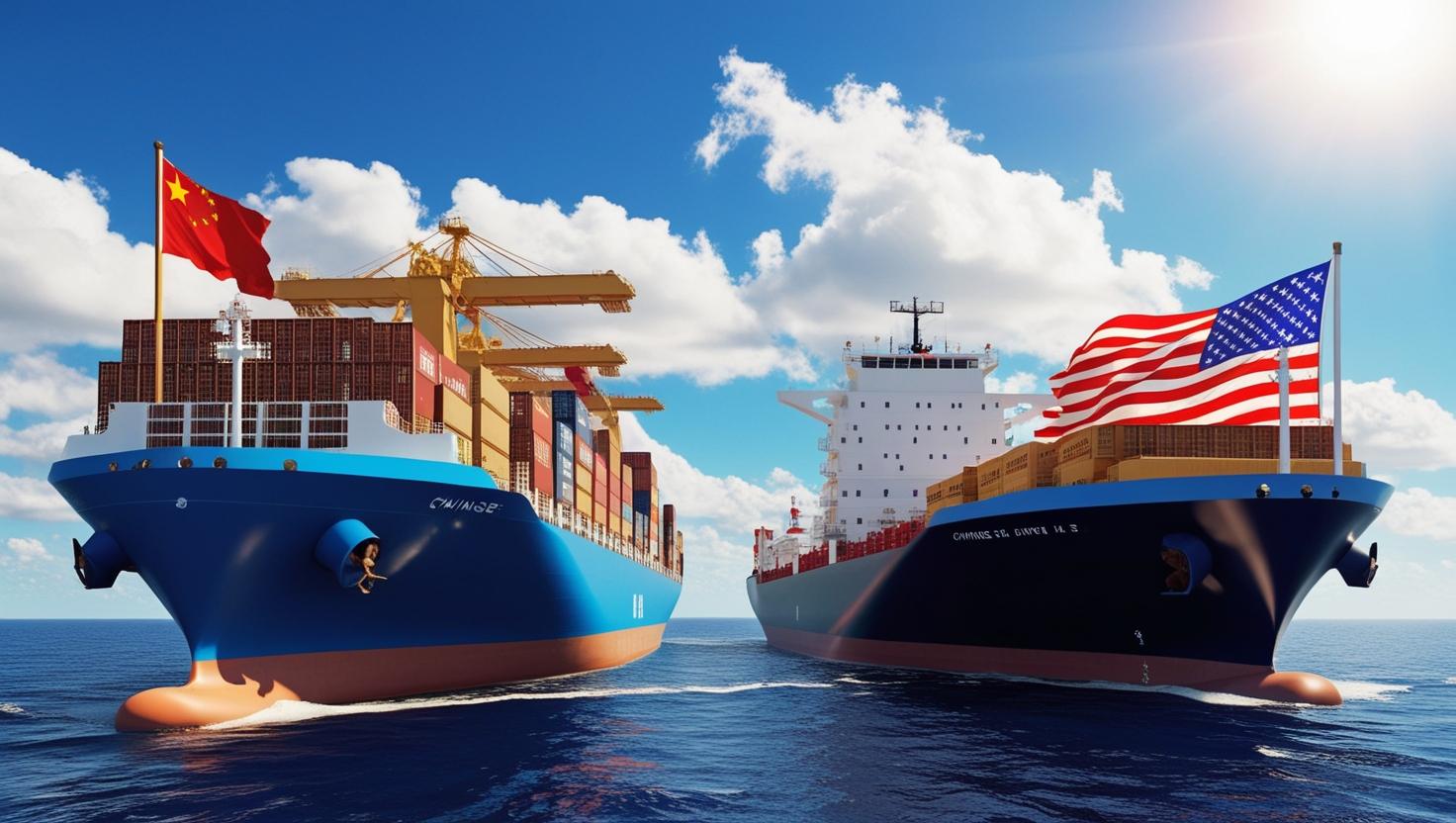
Breaking Trade News: U.S. and China Jointly Agree to Halt the Current Trade War 

On May 12, 2025, the White House and the State Council of China jointly published statements putting a pause on the ever-escalating trade war. This bilateral trade negotiation took place in Geneva during the weekend between May 10-11.  

According to the joint statement, China will lower the tariff on American imports to 10% for 90 days beginning May 14, 2025. The U.S. will simultaneously lower the China specific 125% Reciprocal Tariff to 10% for 90 days beginning May 14, 2025. Currently, the U.S. has imposed a 10% IEEPA Reciprocal Tariff on all imports, except USMCA qualified goods. The Geneva negotiation essentially put China, U.S.’s third largest trading partner, in line with all other countries. However, other duties will continue to apply to Chinese imports, including Section 301 Tariff, Section 232 Tariff, and the IEEPA Fentanyl Tariff. Nonetheless, this weekend negotiation drastically lower tariff on Chinese import by 115%, a significant move since President Trump’s Liberation Day.  

CBP subsequently issued guidance implementing the 90-day suspension. View CSMS here.

Read more:

By |2025-05-13T17:56:10-04:00May 12, 2025|China, Countries, tariffs|0 Comments
Go to Top