U.S. Department of Labor Introduces New Tools to Support Supply Chain Integrity and Address Unfair Foreign Labor Practices

On April 8, 2026, the U.S. Department of Labor (DOL) announced the launch of several tools to empower U.S. companies to strengthen their supply chains and defend against unfair competition stemming from overseas labor abuses.

Self-Assessment Tools

DOL launched four voluntary self-assessment tools that provide practical, user-friendly guidance to help companies map supply-chain risks and evaluate labor practices. The tools can also guide companies in taking steps to ensure alignment with U.S. forced labor laws and strengthen supply chains that support American workers and American industry.

The new tools are: 

  • LaborShield: A mobile app that features information on egregious labor violations in over 145 countries (formerly the Sweat and Toil app).
  • ImportWatch: A resource that brings together the department’s labor abuse research with U.S. import data from the U.S. Census Bureau to produce a red-flag list of all high-risk goods for U.S. importers.
  • SourcingStrong: A tool to help U.S. businesses build strong labor due diligence systems to identify and manage risk in their supply chains.
  • Supply Chain Traceability Portal: The portal provides visibility across supply chains and beyond the first tier to expose where exploitative labor hides.

Announcement Insights 

Diaz Trade Law was in attendance at the launch event in Washington, D.C. – hosted by the DOL and […]

FinCEN Issues NPRM to Fully Implement Whistleblower Program

Authors:

Jennifer Diaz, President, Diaz Trade Law

Amber Pirson, Attorney, Diaz Trade Law


FinCEN’s March 30, 2026, Notice of Proposed Rulemaking (NPRM) marks a major step toward fully operationalizing the agency’s whistleblower program, designed to incentivize reporting of Bank Secrecy Act (BSA), sanctions, IEEPA, and other illicit finance violations. The proposal outlines how whistleblowers can securely submit information, how awards will be determined, and what protections will be available.  

This development reflects the Treasury Department’s broader strategy to strengthen financial system integrity and encourage actionable tips that support enforcement efforts. For financial institutions, compliance professionals, and potential whistleblowers, the NPRM provides long‑awaited clarity on program structure and expectations. 

Overview of the Proposed Rule 

FinCEN’s NPRM proposes a comprehensive framework for administering whistleblower submissions and awards. Key elements include: 

  • Secure submission procedures for individuals reporting suspected violations of the BSA, OFAC sanctions, and related laws. 
  • Eligibility criteria for whistleblower awards, including documentation requirements and timelines. 
  • Award ranges of 10–30% of monetary penalties collected when a whistleblower’s information leads to a successful enforcement action. 
  • Robust protections for individuals who provide information, including confidentiality and anti‑retaliation safeguards. 

These provisions aim to encourage early, detailed reporting while ensuring whistleblowers are shielded from adverse consequences. 

Why FinCEN Is Prioritizing Whistleblower Incentives 

The NPRM aligns with Treasury’s broader […]

FDA Finalizes New National Drug Code Format

On March 5, 2026, the Food and Drug Administration (FDA) published a Final Rule adopting a new format for the National Drug Code (NDC). The rule takes effect on March 7, 2033. On the effective date, the FDA will assign new 12-digit NDCs and convert all previously assigned 10-digit NDCs to the uniform 12-digit NDC format.

What is the NDC?

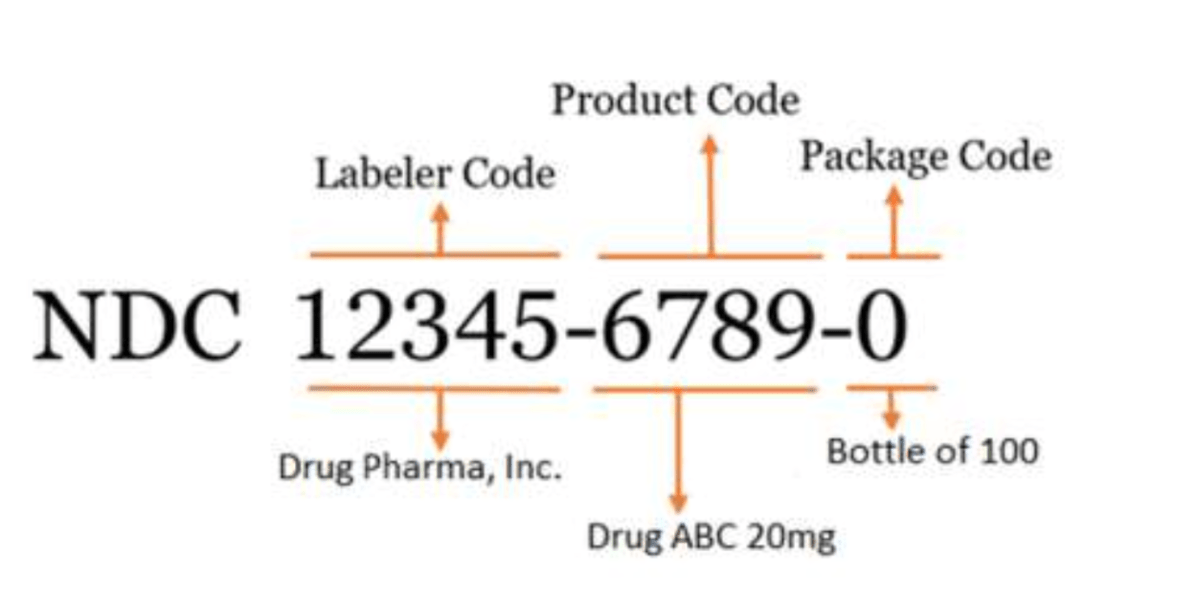
The NDC is an FDA standard for uniquely identifying drugs marketed in the U.S. Currently, the NDC assigned by the FDA for each listed drug marketed in the U.S. is a unique 10-digit number and can be in several different formats.

Current formats:

10-digit identifier

The FDA’s standard NDC is a 10-digit numerical identifier that includes a labeler code, product code, and package code.

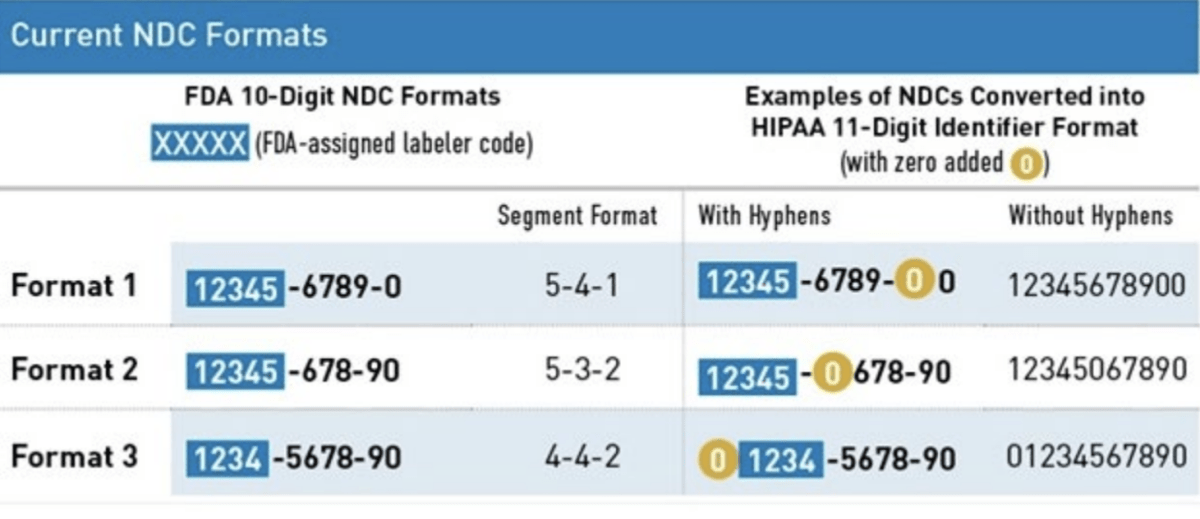
There are 3 FDA-assigned formats for the standard NDC:

  • 4-4-2
  • 5-3-2
  • 5-4-1

HIPAA Format

The Health Insurance Portability and Accountability Act (HIPAA) adopted a uniform 11-digit NDC format that must be used when a HIPAA-covered transaction includes an NDC. This 11-digit format is standardized into a 5-4-2 format and created by adding a leading zero to either the labeler, product, or package code.

Upcoming 6-Digit Format

The FDA will run out of 5-digit labeler codes in 10-15 years. Per FDA regulations (21 CFR 207.33), once the FDA runs out of 5-digit labeler codes, it will start assigning 6-digit labeler codes. Without this proposed change, there would be five NDC formats, 3 in 10- […]

Compliance Mistakes Can Turn Criminal: Don’t Let This Happen to You

Many importers assume that customs compliance issues are purely administrative and can be easily resolved. In reality, customs law and criminal law intersect far more often than most companies realize. What begins as a civil customs matter can escalate quickly into a criminal investigation when regulators suspect fraud, evasion, or willful misconduct.

When Customs Issues Cross the Line

Most customs violations start as a civil enforcement matter. Errors involving classification, valuation, country of origin, or admissibility are often addressed through a request for information (CBP 28), notice of action (CBP 29), protest, prior disclosure, or penalty proceeding. However, when patterns emerge or when agencies believe false statements or deliberate schemes are involved, the enforcement posture can change dramatically.

Federal agencies, including U.S. Customs and Border Protection (CBP), Homeland Security Investigations (HSI), and the Department of Justice (DOJ), routinely collaborate to investigate potential criminal violations tied to import activity. These investigations may focus on:

  • Undervaluation or misclassification to avoid duties
  • False statements or omissions in entry documentation
  • Evasion of import restrictions or regulatory requirements
  • Coordinated schemes involving suppliers, brokers, or intermediaries

Once criminal intent is suspected, importers may face subpoenas, search warrants, asset seizures, or even criminal charges.

Increased Focus on Enforcement

The recent volatile tariff environment has created increased incentives to cheat the system. The U.S. government has made clear that it is

CBP Launches New Forced Labor Portal 

On January 21, 2026, Customs and Border Protection (CBP) launched its new Forced Labor Portal. The Portal provides a central system for submitting review requests for shipments detained or excluded for forced labor enforcement.

Effective, January 21, 2026, importers MUST use the portal to submit the following for review:

  • Withhold Release Order/Finding admissibility reviews.
  • Uyghur Forced Labor Prevention Act applicability reviews.
  • Uyghur Forced Labor Prevention Act requests for exception; and
  • Countering America’s Adversaries Through Sanctions Act exception requests.

All detained or excluded shipments requiring review must be submitted through this Portal, and users must have a login.gov account to access it. Depending on the type of review submitted, submission will be reviewed by CBP personnel in Forced Labor Division, or Port of Entry, or the Center of Excellence and Expertise.

Diaz Trade Law has confirmed with CBP that responses to CBP Form 28 (Request for Information) and CBP Form 29 (Notice of Action) should not be submitted through the Forced Labor Portal.

The Portal is available at https://flportal.cbp.gov/s/login/ and CBP has provided an instructional video on how to submit a request here.

This change reflects another step forward in how CBP interacts with the trade community, transitioning from […]

Go to Top