Technology

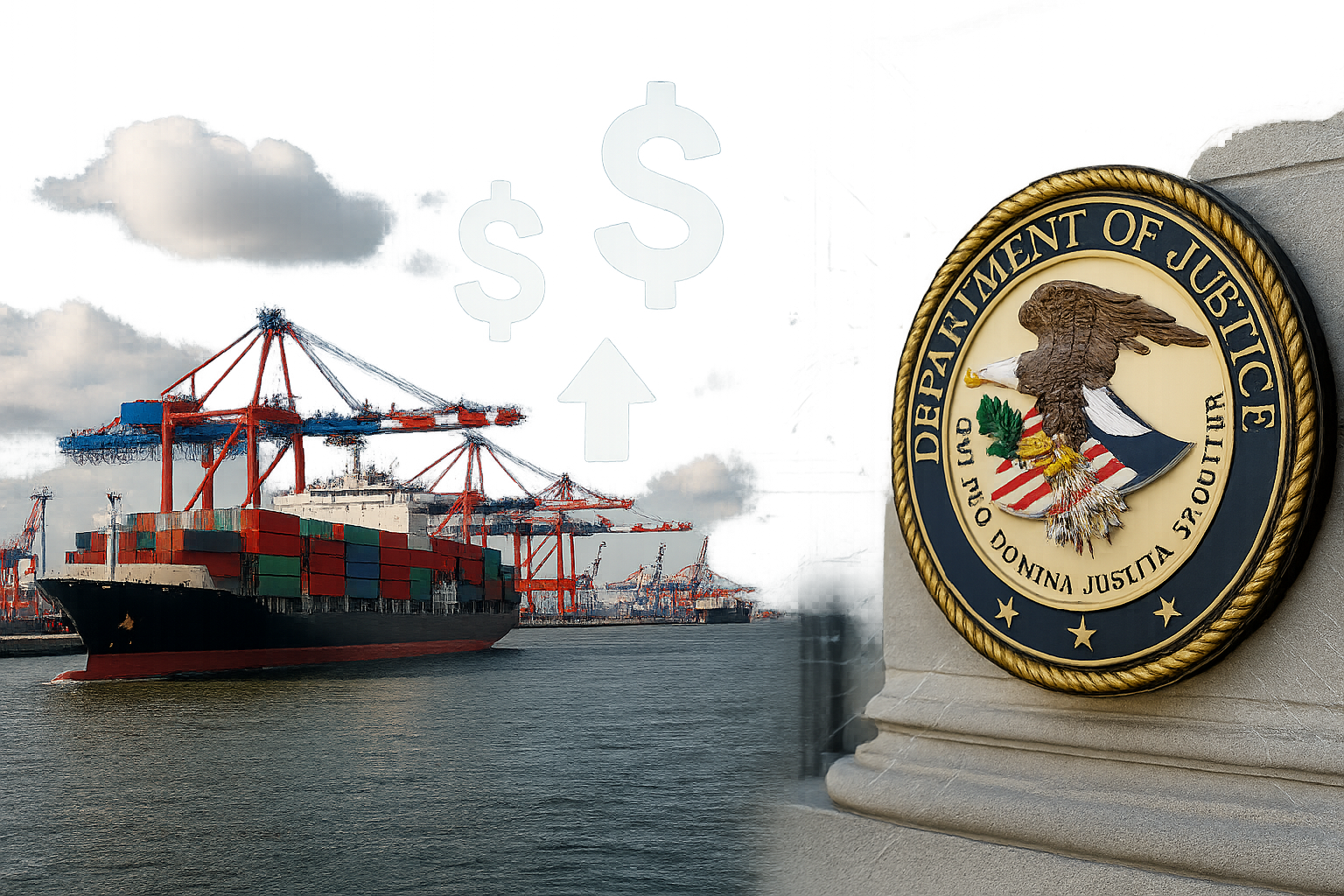
ICYMI: Technology Company Pleads Guilty to Export Control Violations, Agrees to $140M Fine

The U.S. Attorney’s Office for the Northern District of California and the Counterintelligence and Export Control Section (CES) of the Department of Justice’s (DoJ) National Security Division announced that Cadence Design Systems, Inc. of San Jose, California, agreed to plead guilty to resolve criminal violations of export controls. 

As part of the plea agreement, Cadence will pay criminal penalties of nearly $118 million. 

In addition to the charges, the Department of Commerce’s Bureau of Industry and Security (BIS) also announced the resolution of a civil enforcement action against the company in which Cadence agreed to pay over $95 million in civil penalties. 

The DoJ and BIS have coordinated the resolution of the parallel investigation, and each agreed to a partial credit against their fine for payments made to satisfy the other agency’s fine. Under the coordinated agreement, Cadence will pay criminal and civil penalties of more than $140 million.

Cadence committed criminal violations of the export control laws by selling hardware, software, and semiconductor design intellectual property to the National University of Defense Technology (NUDT) in China. NUDT was added to the Department of Commerce’s Entity List in February 2015. The university was involved in the development of supercomputers with applications for military and nuclear explosive simulations. 

Cadence and its Chinese subsidiary engaged in a conspiracy to commit export control violations by exporting this technology to NUDT without obtaining the requisite licenses from […]
Importing Drones into the U.S.: Key CBP Requirements You Need to Know

Authors:
Jennifer Diaz, President, Diaz Trade Law
Jonathan Rupprecht, Aviation Attorney at Rupprecht Law

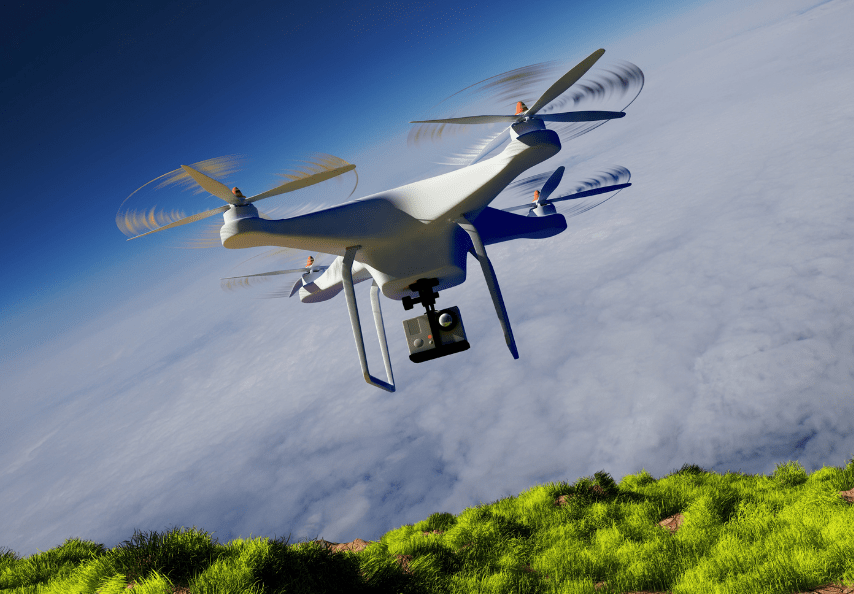
Importing goods into the U.S. requires navigating a web of regulations that spans 47 federal agencies. If you are the importer of record, it is your duty to exercise “reasonable care” in meeting these obligations. As part of this duty, importers must take adequate steps to properly classify and determine the value of imported goods, provide information to CBP in properly assessing duties, and determine whether other applicable legal standards and requirements have been met.

When importing drones into the U.S., importers need to be mindful of several requirements including classification, intellectual property, additional duties, and a changing U.S. trade policy.

Classification

When importing goods into the United States, importers must correctly classify their products. The Harmonized Tariff Schedule of the United States (HTSUS) is the primary resource for classifying goods and determining which tariffs apply.

The HTSUS is issued annually by the International Trade Commission (ITC). It is comprised of a 10-digit import classification system that is specific to the United States. This 10-digit code encompasses the World Customs Organization’s (WCO) six-digit uniform classification system shared among more than 200 countries.

An HTSUS is formatted to list the first 6-digits set forth by the WCO, also known as a heading and subheading and the last four digits assigned by the ITC that are specific to the U.S.

Prior to 2022, the HTSUS has lacked classifications specific to Unmanned Aircraft System (UAS). Importers had to classify under codes applicable to crewed aircraft […]

What You Missed at CBP’s Virtual Trade Week

From September 8-11, U.S. Customs and Border Protection (CBP) held its first virtual trade week. Over the course of the event, CBP held an action-packed series of webinars on the following topics:

  • United States-Mexico-Canada-Agreement (USMCA)
  • Forced Labor
  • Customs-Trade Partnership Against Terrorism (CTPAT)
  • E-Commerce
  • 21st Century Customs Framework (21CCF)

In the midst of this global pandemic and the vast challenges that (we are all navigating) the trade community faces, by us coming together in this way collective commitment to continue our persistent and ongoing dialogue about the most pressing issue facing.  CBP believes that improving and delivering effective transparency is an essential element to enhancing trust, and trust is essential to strengthening partnerships and getting things done for your business to thrive and trade community to succeed.

Below are summaries of each of the sessions. Have questions on them? Contact DTL at info@diaztradelaw.com.

[…]

U.S. Ends Differential Treatment for Hong Kong

On Tuesday, August 11, 2020, United States Customs and Border Protection (CBP) announced via Federal Register Notice that all items made in Hong Kong and destined for the U.S. must now indicate “China” as the country of origin.

Hong Kong’s unique political situation as an autonomous city-state initially called for specially tailored laws and regulations governing items imported into the United States. For more than 20 years the US recognized the separation between China and Hong Kong, evidenced by the requirements to distinguish between the two. Additionally, in light of the Section 301 investigation of China’s acts, policies, and practices related to technology transfer, intellectual property, and innovation; as well as the regime’s human rights and forced labor abuses, the United States is especially keen on identifying items produced in China.

[…]

Government Agencies Seek out Blockchain solutions to Strengthen Current Systems

In an effort to improve the security and tranquility of Americans, Department of Homeland Security (DHS) along with U.S. Customs and Border Protection (CBP) U.S. Citizen and Immigration Services (USCIS) and Transportation Security Administration (TSA) are looking for tech-startups and scientific talent to be integrated into DHS’ Silicon Valley Innovation Program (SVIP). DHS and its subsidiary groups seek to find commercially viable companies to invest in, many of which reside in the same territory of SVIP–Silicon Valley. The goal is to bridge the gap between American technological innovation and the security and effectiveness of government agencies, tasked with the protection of the country.

[…]

Go to Top