January 2025

What Happened This Month in International Trade

From policy shifts to regulatory updates, this month brought significant developments in international trade that could impact businesses worldwide. Here’s a roundup of key developments:

Customs and Border Protection (CBP)

  • CBP issued a proposed rule to enhance low-value shipment enforcement.
  • CBP issued guidance on the modifications made to the Section 301 China Tariff Four Year Review, increasing tariff rates on five subheadings of the Harmonized Tariff Schedule of the United States (HTSUS).
  • CBP issued a proposed rule that would mandate the submission of more detailed electronic export manifest (EEM) data for cargo leaving the U.S. by rail.

Bureau of Industry and Security (BIS)

  • BIS issued an advance notice of proposed rulemaking (ANPRM) seeking public comment to inform a potential rule that would impose restrictions on Chinese drones.
  • BIS published its Export Enforcement 2024 Year in Review Report.
  • BIS orders Haas Automation to pay $2.5M in civil penalties for prohibited transactions, including with entities affiliated with Chinese and Russian defense sectors.

Office of Foreign Assets Control (OFAC)

  • OFAC announced a $1,044,781 settlement with a California-based manufacturer of machine tools and related parts regarding its potential civil liability for apparent violations of OFAC’s Ukraine-/Russia-related sanctions.
  • OFAC announced a $1,076,923 settlement with a Miami, Florida-based natural U.S. person and their real estate company Family International Realty LLC regarding their potential civil liability for apparent violations of OFAC’s Ukraine-/Russia-related sanctions.

Department of Justice (DoJ)

  • Canadian national sentenced to 40 months for multimillion-dollar export control scheme.
  • A resident of both […]
By |2025-02-03T09:06:29-05:00January 31, 2025|news|0 Comments

ICYMI: President Trump Signs America First Trade Policy

One of Donald Trump’s first acts as President included signing the “America First Trade Policy” Presidential Memo. The stated purpose of the memo is to advance a “robust and reinvigorated trade policy that promotes investment and productivity, enhances our Nation’s industrial and technological advantages, defends our economic and national security, and — above all — benefits American workers, manufacturers, farmers, ranchers, entrepreneurs, and businesses.”

The Memo directs several agencies including the Department of Commerce, the Department of Homeland Security, and the United States Trade Representative to take numerous actions including:

  • Investigate the causes of the U.S.’s annual trade deficits in goods, as well as the economic and national security implications and risks resulting from such deficits
  • Investigate the feasibility of establishing an External Revenue Service (ERS)
  • Identify any unfair trade practices by other countries
  • Assess the impact of the United States Mexico Canada Agreement (USMCA) on American workers, farmers, ranchers, service providers, and other businesses
  • Assess the policies and practices of major United States trading partners with respect to the rate of exchange between their currencies and the United States dollar
  • Review existing United States trade agreements and sectoral trade agreements
  • Identify countries with which the United States can negotiate agreements on a bilateral or sector-specific basis to obtain export market access
  • Review policies and regulations regarding the application of antidumping and countervailing duty (AD/CVD) laws
  • Assess how the $800 de minimis exemption impacts the loss of tariff revenues and risk of counterfeit and contraband drug imports
  • Review the impact […]
By |2025-01-24T16:14:19-05:00January 24, 2025|news|0 Comments

Breaking Trade News: CBP Dec Update, UFLPA, BIS

Here is a recap of the latest customs and international trade news:     

Customs and Border Protection (CBP) 

  • CBP released the December 2024 monthly update. Highlights: 
    • Identified estimated duties of nearly $7.4 billion to be collected. 
    • Stopped 1,404 shipments for further examination based on the suspected use of forced labor 
    • Seized 1,687 shipments that contained counterfeit goods  
  • CBP issued a Notice of Proposed Rulemaking to enhance low-value shipment enforcement. 
  • CBP issued an interim final rule that requires producers of automotive parts and vehicles to supply more data elements to prove that these goods are eligible for preferential tariff treatment under the USMCA. 
  • CBP issued a proposed rule that would bans 301 goods from de minimis, and require HTS for all entries. 
  • CBP is adding two new parties (“Intermediary” and “Source”) to the list of entity party types that can input Global Business Identifiers in the ACE Cargo Release. 
  • CBP officers stationed in Chicago […]
By |2025-03-20T22:59:07-04:00January 17, 2025|news, Snapshot|0 Comments

CBP Issues Proposed Rule to Enhance Low-Value Shipment Enforcement

U.S. Customs and Border Protection (CBP) announced a Notice of Proposed Rulemaking (NPRM) that would impose new data collection requirements on low-value shipments, also known as de minimis shipments. If adopted, the rule would create a new, alternative process for entering low-value shipments. The new process would require the submission of advance data such as origin, destination, and contents of the shipment.

De Minimis Background

The concept of de minimis shipments into the United States stems from customs regulations aimed at simplifying the importation of low-value goods. The term “de minimis” refers to shipments that fall below a certain value threshold, allowing them to enter the country with minimal duties or taxes.

Historically, the threshold was set at $200 but was raised to $800 in 2016 under the Trade Facilitation and Trade Enforcement Act (TFTEA). This change was designed to reduce administrative burdens on CBP and facilitate faster processing of e-commerce shipments, which were rapidly increasing in volume. Over the last decade, the number of shipments claiming the de minimis exemption has increased significantly, from approximately 140 million a year to over one billion a year.

Today, CBP processes over 4 million de minimis shipments into the U.S. each day. Current regulations require very little information about these shipments, making it increasingly difficult for CBP to identify and intercept high-risk shipments. The U.S. Congress and the Biden Administration have called for de minimis reforms.

The Proposed Rule

The rule proposes the establishment of an enhanced entry process that would require the […]

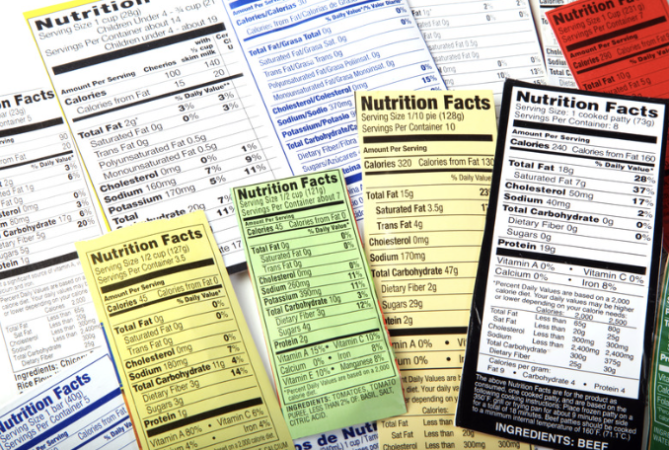
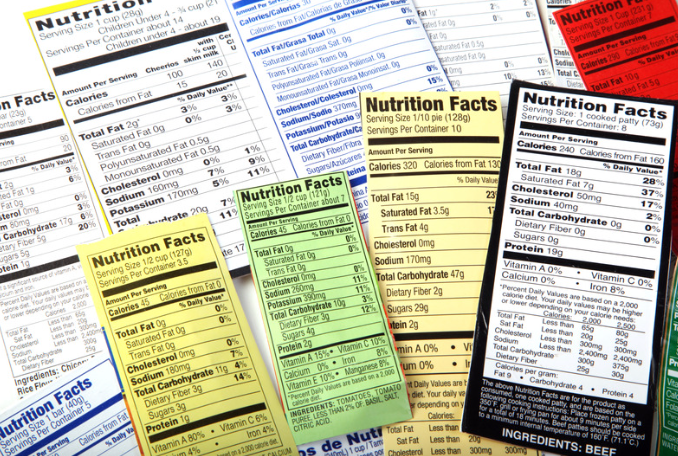
FDA Issues Proposed Rule on Front-of-Package Nutrition Labeling

The U.S. Food and Drug Administration (FDA) issued a proposed rule that would require a front-of-package (FOP) nutrition label on most packaged foods.

Rule Details

The label, referred to as the “Nutrition Info Box,” must contain the amounts (per serving) of three nutrients:

  • Saturated fat
  • Sodium
  • Added sugar

The label must also list whether the amount of these ingredients per serving is “Low,” “Med,” or “High.”

The FDA is proposing a compliance date of three years after the final rule’s effective date for businesses with $10 million or more in annual food sales. Businesses with less than $10 million in annual food sales would have four years to comply.

FDA Intent

The FDA stated that the Nutrition Info Box would complement the Nutrition Facts label that is already required on most packaged food. While the Nutrition Facts label is helpful to many consumers, the FDA found that some segments of the population do not regularly read the label.

Therefore, this rule is intended to provide accessible, at-a-glance information to help consumers quickly and easily identify how foods can be part of a healthy diet.

The agency conducted a literature review that included focus group testing and a peer-reviewed experimental study to explore consumer reactions and responses to various FOP nutrition labels.

The results indicated that interpretive FOP nutrition information is helpful for consumers and easy to understand.

Input on the Rule

The FDA is currently seeking public input on the proposed rule. The deadline to submit comments is May 16, 2025. If you will be impacted by the new requirements, […]

Go to Top