February 2026

What Happened This Month in International Trade (February 2026)

Supreme Court  

  • On February 20, 2026, the Supreme Court issued its opinion in Learning Resources, Inc., et al. v. Trump, ruling that IEEPA does not authorize the president to impose tariffs. 

Administration 

  • In response to the Supreme Court’s IEEPA ruling, President Trump issued a Proclamation imposing a 10% tariff on all goods under Section 122 of the Trade Act. The President also announced that he will be increasing it to the lawful maximum of 15%, but the effective date has not yet been set. 
  • President Trump signed an Executive Order continuing the suspension of duty-free de minimis treatment for all countries. 
  • The U.S. and Bangladesh released a joint statement on reciprocal trade. The U.S. is lowering the tariffs on Bangladeshi exports to 19% rather than the 20%. The U.S. will also establish a mechanism for a tariff rate quota for Bangladeshi textile and apparel imports, with goods coming in under the quota entering duty-free.  
  • President Trump announced on Truth Social that the U.S.’s trade deal with Japan is moving forward and that Japan will make its first set of investments under its $550 billion dollar commitment. 
By |2026-02-26T11:40:45-05:00February 26, 2026|news, Snapshot, Uncategorized|0 Comments

New AD/CVD Case Filed Against Truck Bed Covers From China   

A new antidumping and countervailing duty action has been filed against Truck Bed Covers from China. The allegation is that imports from China are unfairly subsidized and being dumped.  

Full list of importers and exporters here. 

Background on AD/CVD Investigations 

Antidumping duty (“AD”) and countervailing duty (“CVD”) investigations are brought jointly by the U.S. International Trade Commission (“USITC”) and the U.S. Department of Commerce (“Commerce”). AD investigations are triggered when a domestic industry alleges that it has been injured by competing imports of particular goods from specific countries being sold at less than a fair value. Meanwhile, CVD investigations are triggered when a domestic industry alleges that it has been injured by competing imports that are being unfairly subsidized by their governments. The domestic industry initiating the investigation is known as the petitioner while the foreign industry participating in the investigation is known as the respondent. 

Scope of the Investigation 

 The merchandise covered by these investigations is truck bed covers, which are protective shields made of aluminum, fiberglass, carbon fiber, plastic, and/or water-resistant fabric that are seized to span the open-top area of a pickup truck.   

The products subject to the investigation are currently classified in the Harmonized Tariff Schedule of the United States (HTSUS) under the following subheading: 8708.29.5160.    

Full scope here.

Next Steps 

The Commerce Department will determine whether to initiate the investigations within 20 days. The USITC will reach […]

By |2026-02-25T20:48:11-05:00February 25, 2026|AD/CVD, U.S. Department of Commerce (DOC)|0 Comments

Act Now to Preserve Your Right to Duty Refunds

In the wake of the recent Supreme Court ruling that the Trump IEEPA tariffs are unlawful, importers face a clear reality: the duty landscape will remain active, litigated, and evolving. As duties continue to be assessed, challenged, and recalculated, importers must be proactive in protecting their refund rights.

Filing Suit at the CIT for IEEPA Tariffs

Because the Supreme Court has upheld the Federal Circuit’s decision, the case is remanded to the Court of International Trade (CIT).  This remand was initially to determine whether it can issue a nationwide injunction to prevent the collection of future IEEPA tariffs, but this has been rendered moot as there is now a CBP CSMS message terminating the collection of the IEEPA tariffs. The secondary issue is whether and how, refunds will be paid.

The President has made it clear that the United States intends to fight the refund process. We are confident that importers who have filed suit in the CIT will be eligible to receive refunds for the IEEPA Tariffs they paid. However, the CIT will need to provide specific instructions for obtaining an order issuing refunds. It is far less clear whether, and how, refunds will be issued for those that do not go to Court.

We encourage all importers impacted by the IEEPA tariffs to file a court challenge in the CIT. We believe that doing so preserves the right to receive refunds for IEEPA tariffs paid without having to pursue a long additional post-decision process.

Legal Challenge to Section 122

On February 20, 2026, President Trump announced he would replace the IEEPA tariffs with a tariff based […]

By |2026-03-02T09:32:45-05:00February 24, 2026|tariffs|0 Comments

Supreme Court Rules IEEPA Tariffs Are Unlawful

Today, the Supreme Court of the United States (SCOTUS) issued its opinion in Learning Resources, Inc., et al. v. Trump. The Court ruled that IEEPA does not authorize the president to impose tariffs. 

The Court rejected the Trump Administration’s assertion that the statutory text of IEEPA delegates Congressional tariff powers to the President, finding that Congress would not have delegated “highly consequential power” through ambiguous language.

The majority wrote, “Based on two words separated by 16 others in … IEEPA, ‘regulate’ and ‘importation’–the President asserts the independent power to impose tariffs on imports from any country, of any product, at any rate, for any amount of time. Those words cannot bear such weight.”

The decision was 6-3, with Justice Thomas, Alito, and Kavanaugh dissenting.

What This Means for Importers

The Trump Administration has made clear that, regardless of the Supreme Court’s decision, tariffs will remain a cornerstone of their trade and “America First” policy. 

On January 9, 2026, National Economic Council Director Kevin Hassett said of the Supreme Court case: “Our expectation is that we’re going to win, and if we don’t win, then we know that we’ve got other tools that we can use that get us to the same place.” He also said in a Fox Business Interview that the Administration has a backup plan ready to go that would allow tariffs to be put “back into […]

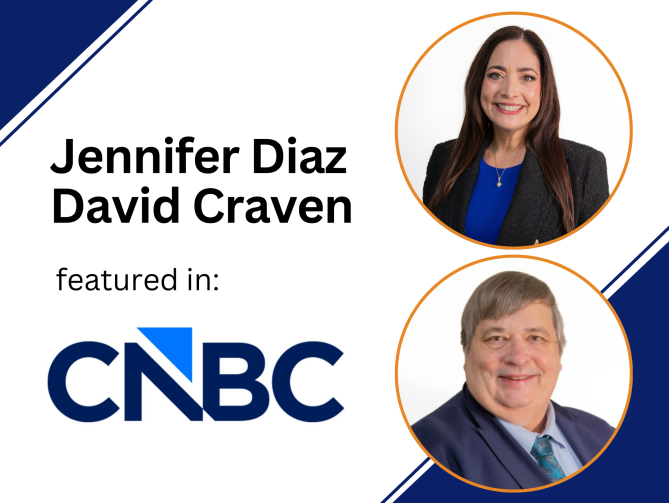
DTL’s Jennifer Diaz and David Craven Featured in CNBC

We are thrilled to announce DTL’s Jennifer Diaz and Of Counsel David Craven were recently featured in an article by CNBC.

Reporter Lori Ann LaRocco dives into the recent rise in customs bond insufficiency notices in her Feb. 6 article: President Trump’s tariffs fueled U.S. Customs bond market boom. Now billions hang on Supreme Court ruling.

Here are two excerpts from the piece:

“Jennifer Diaz, board-certified international attorney at Diaz Trade Law, said the number of bond insufficiency notices issued has quadrupled since 2017 and has accelerated recently due to the volatile tariff environment.”

“David Craven, counsel to Diaz Trade, said the threat of new replacement tariffs, coupled with the existing liability facing surety companies, suggests that any refunds would not be immediate. “The fact that liability has gone up, and Customs is now asking the sureties for collateral … operations are at risk, and sureties understandably don’t want to be caught holding the bag,” Craven said.”

Read the full article here.

Jennifer Diaz was also featured in a separate CNBC piece on Feb. 12: Trump tariffs leave importers with record-breaking $3.5 billion U.S. Customs bond funding shortfall.

Jen said:

“In totality, it makes sense that insufficiencies are more than double,” said Jennifer Diaz, attorney at Diaz Trade Law. “Many companies take it for granted that a $50,000 bond should be able to cover you for […]

Go to Top