Reasonable Care

ICYMI: Patio Furniture Company Agrees to Pay $4.9 Million to Resolve Duty Evasion Allegations

On July 24, 2025, the Department of Justice (DoJ) announced that Grosfillex, Inc., a Pennsylvania furniture company, agreed to pay $4.9 million to resolve allegations it evaded antidumping and countervailing duties (AD/CVD).

Grosfillex submitted false forms to Customs and Border Protection (CBP) claiming that furniture parts made of extruded aluminum from China were not subject to AD/CVD. The company attempted to hide the aluminum extrusions by falsely packing them as sham “furniture kits.” Additionally, for a different subset of extrusions, the company failed to correct customs forms it had submitted previously, even after learning that the forms contained false information.

The investigation arose from a whistleblower lawsuit filed under the False Claims Act by a former employee of Grosfillex. Under the False Claims Act, private citizens can sue on behalf of the government and share in any recovery. In this case, the whistleblower will receive $962,662.74.

Duty Evasion is on the Rise

This case is just one example of the growing incentive to cheat that comes with higher tariffs. Whether it’s through misclassifying goods, undervaluing imports, or using deceptive transshipment routes, some companies think they are being creative, but, instead, are participating in outright illegal strategies to reduce their tariff liability.

Higher tariffs have even contributed to the emergence of a cottage industry of “tariff reduction” companies that suggest ways to cut import costs. However, many of these so-called strategies amount to evasion, […]

CIT Hands Down $3.4M Penalty for Duty Evasion

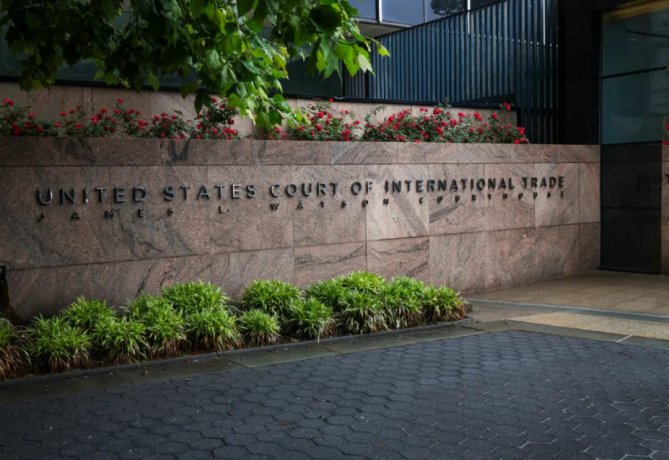
On July 18, 2025, the Court of International Trade (CIT) granted the government’s motion for default judgment against importer Rayson Global and its owner, Doris Cheng, for negligently failing to pay duties. 

The Case

The government’s case was filed in 2023, alleging that the importers had falsely declared that Chinese-origin goods as Thai origin to evade duties. The government asserted this false declaration avoided payment of ordinary 6% duties, Section 301 duties ranging from 10% to 25%, and 234.51% antidumping duties. 

The government asked the court to impose a penalty for negligence. The penalty amount is twice the loss of revenue or the domestic value, whichever is lower. After the importer failed to answer the complaint (a huge mistake), the U.S. moved for summary judgment.

The CIT granted the government’s motion and ordered the importer to pay a nearly $3.4 million penalty as well as all unpaid duties, taxes, and cash deposits on the unliquidated entries in question.

Duty Evasion is on the Rise

This case is just one example of the growing incentive to cheat that comes with higher tariffs. Whether it’s through misclassifying goods, undervaluing imports, or using deceptive transshipment routes, some companies are turning to creative or outright illegal strategies to reduce their tariff liability.

These incentives have even contributed to the emergence of a cottage industry of “tariff reduction” companies that suggest ways to cut import costs. However, many of these so-called strategies amount […]

Importing Drones into the U.S.: Key CBP Requirements You Need to Know

Authors:
Jennifer Diaz, President, Diaz Trade Law
Jonathan Rupprecht, Aviation Attorney at Rupprecht Law

Importing goods into the U.S. requires navigating a web of regulations that spans 47 federal agencies. If you are the importer of record, it is your duty to exercise “reasonable care” in meeting these obligations. As part of this duty, importers must take adequate steps to properly classify and determine the value of imported goods, provide information to CBP in properly assessing duties, and determine whether other applicable legal standards and requirements have been met.

When importing drones into the U.S., importers need to be mindful of several requirements including classification, intellectual property, additional duties, and a changing U.S. trade policy.

Classification

When importing goods into the United States, importers must correctly classify their products. The Harmonized Tariff Schedule of the United States (HTSUS) is the primary resource for classifying goods and determining which tariffs apply.

The HTSUS is issued annually by the International Trade Commission (ITC). It is comprised of a 10-digit import classification system that is specific to the United States. This 10-digit code encompasses the World Customs Organization’s (WCO) six-digit uniform classification system shared among more than 200 countries.

An HTSUS is formatted to list the first 6-digits set forth by the WCO, also known as a heading and subheading and the last four digits assigned by the ITC that are specific to the U.S.

Prior to 2022, the HTSUS has lacked classifications specific to Unmanned Aircraft System (UAS). Importers had to classify under codes applicable to crewed aircraft […]

Summary of CBP’s March 2023 Forced Labor Technical Expo

Summary of CBP’s March 2023 Forced Labor Technical Expo 

CBP held a Forced Labor Technical Expo from March 14-15, comprised of experts and service providers highlighting tools to utilize for supply chain transparency to comply with The Uyghur Forced Labor Prevention Act (UFLPA) and the general “reasonable care” obligations of U.S. importers. UFLPA was signed into law December 31, 2021, and seeks to prohibit imports of certain goods from China’s Xinjiang Uyghur Autonomous Region, where it has been reported that the Chinese government is using forced labor of Uyghur Muslims and other ethnic and religious minorities in detention camps and factories. For more information about the UFLPA, please see our previous blog articles here and here.  

CBP Data Dashboard  

CBP launched a UFLPA data dashboard where the trade community can now monitor forced labor enforcement by origin, commodity, CBP Center of Excellence and Expertise, and more. See the screenshot of the new dashboard below and note that the countries of export most targeted are NOT China, contrary to popular belief. This is partly due to the fact that most UFLPA enforcement to date has been on solar panels, which may include Chinese-origin raw materials but are generally further manufactured outside of China. Notably, CBP is actively tracking many different types of products across many different industries with raw materials that originate in China and that are further manufactured in other countries for forced labor enforcement. […]

UFLPA DHS Forced Labor Guidance – What Importers Need to Know

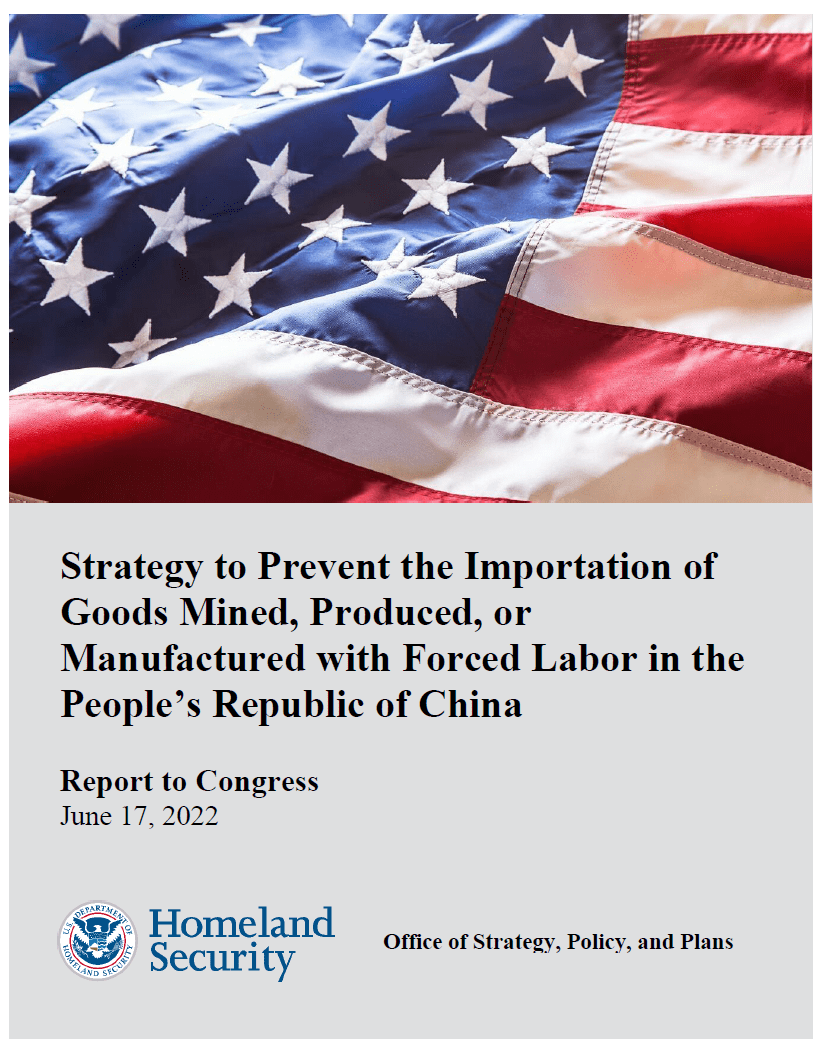
On June 17,  2022, DHS published its long-awaited strategy guidance document which shed light on how UFLPA will be implemented, and what evidence may be provided to rebut the presumption that the goods were made with forced labor. This article provides an overview of the type of evidence importers should have readily available when importing goods into the United States. For general guidance on preventing the importation of goods produced with forced labor and how importers should audit their supply chain to ensure non-use of forced labor, please refer to our Bloomberg Law article, “U.S. Customs Targets Use of Forced Labor”.

UFLPA

The Uyghur Forced Labor Prevention Act (UFLPA) establishes a rebuttable presumption that goods mined, produced, or manufactured wholly or in part in the Xinjiang Province of China or by an entity on the UFLPA Entity List are prohibited from importation into the United States under 19 U.S.C. § 1307. However, if an Importer of Record can demonstrate by clear and convincing evidence that the goods in question were not produced wholly or in part by forced labor, fully respond to all CBP requests for information about goods under CBP review and demonstrate that it has fully complied with the guidance outlined in this strategy, the Commissioner of CBP may grant an exception to the presumption.

Clear and convincing evidence is a higher standard of proof than a preponderance of the evidence, and generally means that a claim or […]

Go to Top