U.S. Office of the United States Trade Representative (USTR)

FinCEN Issues NPRM to Fully Implement Whistleblower Program

Authors:

Jennifer Diaz, President, Diaz Trade Law

Amber Pirson, Attorney, Diaz Trade Law


FinCEN’s March 30, 2026, Notice of Proposed Rulemaking (NPRM) marks a major step toward fully operationalizing the agency’s whistleblower program, designed to incentivize reporting of Bank Secrecy Act (BSA), sanctions, IEEPA, and other illicit finance violations. The proposal outlines how whistleblowers can securely submit information, how awards will be determined, and what protections will be available.  

This development reflects the Treasury Department’s broader strategy to strengthen financial system integrity and encourage actionable tips that support enforcement efforts. For financial institutions, compliance professionals, and potential whistleblowers, the NPRM provides long‑awaited clarity on program structure and expectations. 

Overview of the Proposed Rule 

FinCEN’s NPRM proposes a comprehensive framework for administering whistleblower submissions and awards. Key elements include: 

  • Secure submission procedures for individuals reporting suspected violations of the BSA, OFAC sanctions, and related laws. 
  • Eligibility criteria for whistleblower awards, including documentation requirements and timelines. 
  • Award ranges of 10–30% of monetary penalties collected when a whistleblower’s information leads to a successful enforcement action. 
  • Robust protections for individuals who provide information, including confidentiality and anti‑retaliation safeguards. 

These provisions aim to encourage early, detailed reporting while ensuring whistleblowers are shielded from adverse consequences. 

Why FinCEN Is Prioritizing Whistleblower Incentives 

The NPRM aligns with Treasury’s broader […]
Supreme Court Rules IEEPA Tariffs Are Unlawful

Today, the Supreme Court of the United States (SCOTUS) issued its opinion in Learning Resources, Inc., et al. v. Trump. The Court ruled that IEEPA does not authorize the president to impose tariffs. 

The Court rejected the Trump Administration’s assertion that the statutory text of IEEPA delegates Congressional tariff powers to the President, finding that Congress would not have delegated “highly consequential power” through ambiguous language.

The majority wrote, “Based on two words separated by 16 others in … IEEPA, ‘regulate’ and ‘importation’–the President asserts the independent power to impose tariffs on imports from any country, of any product, at any rate, for any amount of time. Those words cannot bear such weight.”

The decision was 6-3, with Justice Thomas, Alito, and Kavanaugh dissenting.

What This Means for Importers

The Trump Administration has made clear that, regardless of the Supreme Court’s decision, tariffs will remain a cornerstone of their trade and “America First” policy. 

On January 9, 2026, National Economic Council Director Kevin Hassett said of the Supreme Court case: “Our expectation is that we’re going to win, and if we don’t win, then we know that we’ve got other tools that we can use that get us to the same place.” He also said in a Fox Business Interview that the Administration has a backup plan ready to go that would allow tariffs to be put “back into […]

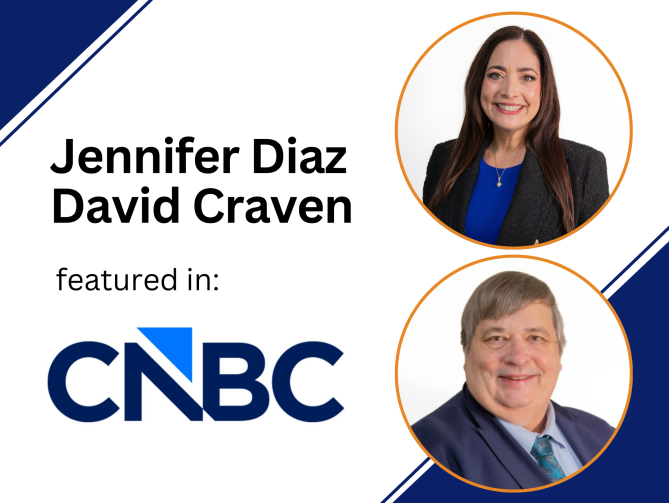
DTL’s Jennifer Diaz and David Craven Featured in CNBC

We are thrilled to announce DTL’s Jennifer Diaz and Of Counsel David Craven were recently featured in an article by CNBC.

Reporter Lori Ann LaRocco dives into the recent rise in customs bond insufficiency notices in her Feb. 6 article: President Trump’s tariffs fueled U.S. Customs bond market boom. Now billions hang on Supreme Court ruling.

Here are two excerpts from the piece:

“Jennifer Diaz, board-certified international attorney at Diaz Trade Law, said the number of bond insufficiency notices issued has quadrupled since 2017 and has accelerated recently due to the volatile tariff environment.”

“David Craven, counsel to Diaz Trade, said the threat of new replacement tariffs, coupled with the existing liability facing surety companies, suggests that any refunds would not be immediate. “The fact that liability has gone up, and Customs is now asking the sureties for collateral … operations are at risk, and sureties understandably don’t want to be caught holding the bag,” Craven said.”

Read the full article here.

Jennifer Diaz was also featured in a separate CNBC piece on Feb. 12: Trump tariffs leave importers with record-breaking $3.5 billion U.S. Customs bond funding shortfall.

Jen said:

“In totality, it makes sense that insufficiencies are more than double,” said Jennifer Diaz, attorney at Diaz Trade Law. “Many companies take it for granted that a $50,000 bond should be able to cover you for […]

Reminder! Three Upcoming USTR Filing Deadlines

This month, the United States Trade Representative (USTR) announced it is seeking comments from the public and trade community on three initiatives: (i) extension of 301 exclusions; (ii) the National Trade Estimate Report on Foreign Trade Barriers, and (iii) joint Review of USMCA.

Extending 301 Exclusions

There are currently 178 effective exclusions in the Section 301 investigation of China’s acts, policies, and practices related to technology transfer, intellectual property, and innovation. These products are exempt from additional 301 duties. USTR has extended these exclusions several times, including a recent 90-day extension through November 29, 2025. USTR is seeking public comment on whether any of the 178 effective exclusions warrant further extension beyond November 29, 2025.

Comments are due October 16, 2025.

National Trade Estimate Report

Each year, USTR publishes the National Trade Estimate Report on Foreign Trade Barriers (NTE Report). USTR is seeking input to assist it in identifying significant foreign barriers to, or distortions of, U.S. exports of goods and services and U.S. foreign direct investment. 

Commenters should submit information related to one or more of the following categories of foreign trade barriers:

  • Import policies
  • Technical barriers to trade
  • Sanitary and phytosanitary measures
  • Government procurement
  • Intellectual property protection
  • Services
  • Investment
  • […]

ICYMI: BIS Initiates 232 Investigations of UAS and Polysilicon Imports

On July 15, 2025, the Bureau of Industry and Security announced Section 232 National Security Investigations of: (i) Unmanned Aircraft Systems (UAS) and their parts/components, and (ii) polysilicon and related derivatives.

The Federal register notices are available here (UAS) and here (polysilicon).

BIS is specifically interested in the following information:

  1. The current and projected demand for these products and the extent to which domestic production can meet this demand
  2. The role of foreign supply chains, particularly of major exporters, in meeting United States demand 
  3. The concentration of U.S. imports from a small number of suppliers and the associated risks
  4. The impact of foreign government subsidies and predatory trade practices 
  5. The economic impact of artificially suppressed prices due to foreign unfair trade practices and state-sponsored overproduction
  6. The potential for export restrictions by foreign nations
  7. The feasibility of increasing domestic capacity to reduce import reliance
  8. The impact of current trade policies on domestic production and whether additional measures, including tariffs or quotas, are necessary to protect national security

The deadline to submit comments is August 6, 2025.

The investigations could result in new trade restrictions, including tariffs. If you import products covered under these investigations, make your […]

Go to Top