U.S. Department of Commerce

BIS Initiates 232 Investigations of Pharmaceuticals and Semiconductors

The U.S. Department of Commerce Bureau of Industry and Security (BIS) announced the initiation of investigations into the effects on U.S. national security of imports of pharmaceuticals and pharmaceutical ingredients and imports of semiconductors and semiconductor manufacturing equipment.

The basis of the investigations is Section 232 of the Trade Expansion Act of 1962. Under Section 232, the president can restrict imports of products that are found to threaten to impair national security.

On April 16, BIS published two federal register notices (pharmaceuticals, semiconductors) seeking public comment. Comments are due May 7, 2025.

Pharmaceuticals and Pharmaceutical Ingredients

The scope of the pharmaceutical investigation covers pharmaceuticals and pharmaceutical ingredients, including:

  • Finished drug products
  • Medical countermeasures
  • Critical inputs such as active pharmaceutical ingredients
  • Key starting materials, and derivative products of those items

Among other information, BIS is particularly interested in comments that address:

  • Demand for pharmaceuticals and pharmaceutical ingredients in the United States
  • The extent to which domestic production of pharmaceuticals and pharmaceutical ingredients can meet domestic demand
  • The role of foreign supply chains, particularly of major exporters, in meeting United States demand for pharmaceuticals and pharmaceutical ingredients
  • The impact of foreign government subsidies and predatory trade practices on United States pharmaceuticals industry competitiveness
  • Whether additional measures, including tariffs or quotas, are necessary to protect national security

Interested parties may submit a comment in this proceeding on or before May 7, 2025 at Regulations.gov using ID BIS-2025-0022.

Semiconductors and Semiconductor Manufacturing Equipment

The scope of the semiconductor investigation covers semiconductors, semiconductor manufacturing equipment, and their derivative products, […]
BIS Releases New Edition of “Don’t Let This Happen to You”

The Department of Commerce’s Bureau of Industry and Security (BIS) published an updated version of Don’t Let This Happen to You!, a list of case examples highlighting BIS enforcement efforts including criminal cases.

Case highlights:

The publication highlights over 100 cases covering various violations of export control laws.

Military Controls

The owner of BQ Tree Consulting in Jacksonville, Florida, along with the President and Manager of the company were indicted for conspiring to illegally export military-grade combat rubber raiding craft (CCRC) to China.

The scheme involved providing a U.S. company with false end-use and end-user information for a front company in Hong Kong, which was used to complete the transaction ultimately destined for China. The intention was to reverse engineer the CRRC and engines to mass produce them for the Chinese People’s Liberation Army (PLA) Navy.

The company owner was sentenced to 16 months in prison, two years of supervised release, mandatory mental health screening, and a $200 special assessment. The company President was sentenced to 42 months confinement, three years of probation, a $50,000 criminal fine, and a $200 special assessment. The company manager was sentenced to 17 months in prison, one year of supervised release pending deportation, a prohibition on employment with any company that deals with the military, and a $100 special assessment.

National Security Controls

GlobalFoundries U.S. Inc., a semiconductor wafer manufacturing company headquartered in Malta New York violated the Export Administration Regulations (EAR) by sending 74 shipments of semiconductor wafers, valued at approximately $17.1 million, to SJ Semiconductor (SJS), a company […]

By |2024-11-22T07:13:34-05:00November 22, 2024|EAR, Export, U.S. Department of Commerce|0 Comments

BIS Issues New Guidelines for Preparing Export License Applications Involving Foreign Persons (Deemed Exports/Reexports) 

The Bureau of Industry and Security (BIS) issued new guidelines to assist deemed export applicants in obtaining licenses. The guidelines primarily apply to employment situations; however, they also address other situations such as the release of controlled technology to foreign students participating in research. 

The guidelines cover basic requirements for applying and renewal and include an application checklist. 

Background on Licenses for Deemed Exports/Reexports 

The obligation to obtain an export license from BIS before releasing controlled technology to a foreign person is informally referred to as a “deemed” export. The release is considered an export to the person’s country or countries of nationality.   

The Export Administration Regulations (EAR), Section 734.13, defines a deemed export as releasing or otherwise transferring “technology” or “source code” to a foreign person in the United States.  

Typical organizations using deemed export licenses include universities, research institutions, bio-chemical firms, medical organizations, and computer companies.    

New Guidance 

 The basic guidance for filling out license applications is set forth in Supplement 1 to part 748 of the EAR. The new guidelines supplement the basic guidance and are intended to assist licensing officers in reviewing license applications more efficiently. 

Basic Requirements 

The guidelines reiterate that applicants must include all the necessary information and documentation required when submitting a license application. BIS will return applications with insufficient information.  

Basic documentation required: 

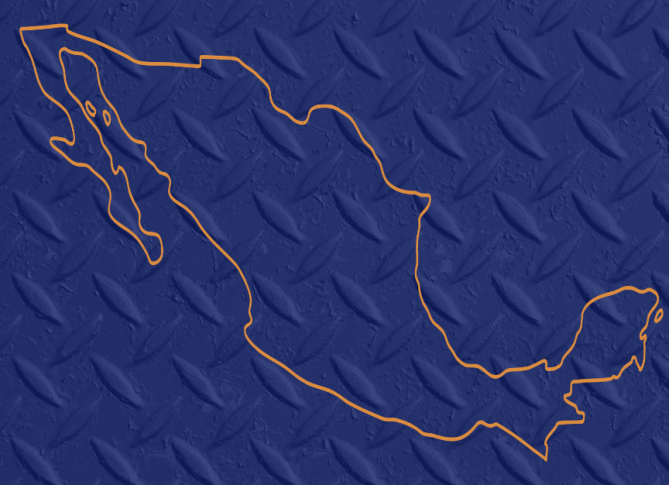
Reminder: New Section 232 Duties on Certain Steel and Aluminum Products from Mexico

On July 10, 2024, President Biden issued two proclamations on adjusting imports of steel and aluminum into the United States. The proclamations increase the section 232 duty rate for both products and adjust the requirements for avoiding section 232 duties.

Steel Proclamation

The steel proclamation implements a melt and pour requirement for imports of steel articles that are products of Mexico. It also increases the section 232 duty rate for imports of steel articles and derivative steel articles that are products of Mexico that are melted and poured in a country other than Mexico, Canada, or the United States. If the country of melt and pour is any country other than the U.S., Mexico, or Canada, then the steel articles are subject to an additional 25% duty.

In making this adjustment, the Administration stated that domestic steel producers’ capacity utilization remains below the target 80 percent capacity utilization recommended in the Secretary of Commerce’s report of January 11, 2018. Additionally, imports of steel articles from Mexico have increased significantly. In the opinion of the Administration and the Secretary of Commerce, these developments indicate the need for further action under section 232.

Aluminum Proclamation

The aluminum proclamation implemented a country of smelt and country of most recent cast requirement for imports of aluminum articles that are products of Mexico. It also increased the section 232 duty rate for imports of aluminum articles and derivative aluminum articles that are products of Mexico containing aluminum for which the reported […]

ICYMI: BIS Updates Boycott Requester List

The Department of Commerce’s Bureau of Industry and Security (BIS) published its first quarterly update of the Boycott Requester List. The list notifies companies, freight forwarders, financial entities, and individuals of potential sources of boycott-related requests that they may receive.

Background on Boycott Requests

BIS is charged with enforcing anti-boycott laws under the Export Administration Regulations (EAR). The laws prohibit U.S. companies from taking actions in furtherance of a boycott maintained by a foreign country against a country friendly to the United States. Common boycott requests include:

  • Requesting a certification that goods are not from a specific country
  • Requesting that goods are not shipped to a certain country
  • Requesting that a business does not engage with a particular country

U.S. persons must report boycott-related requests to BIS’s Office of Anti-boycott Compliance (OAC).

Boycott Requester List

OAC maintains a boycott-requester list to raise awareness and assist U.S. persons in identifying sources of boycott-related requests.

Entities on the list have been reported by a U.S. person to BIS via a request report form. The list is updated quarterly but is not an exhaustive list of entities that may make these requests.

The most recent update to the list includes 57 additions and the removal of 127 entities.

Requesting countries added in the most recent update include:

  • Afghanistan
  • Algeria
  • Bangladesh
  • Germany
  • India
  • Iraq
  • Japan
  • Kuwait
  • Malaysia
  • Norway
  • Oman
  • Pakistan
  • Saudi Arabia
  • Singapore
  • Switzerland
  • United Arab Emirates
  • Qatar
  • Vietnam

Exporters have a duty to remain vigilant in spotting boycott-related requests and reporting them to […]

Go to Top